 Save
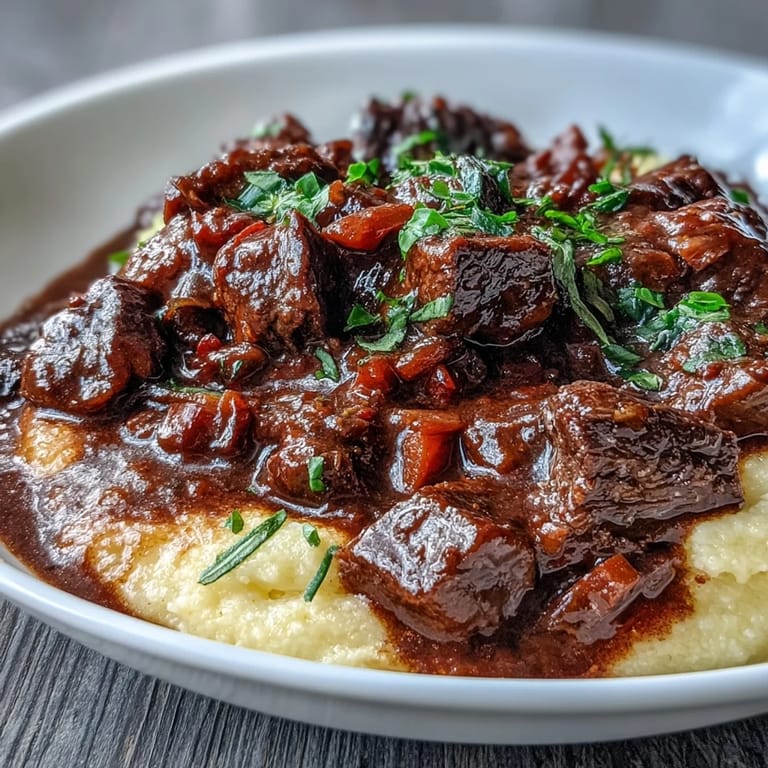
Save The first spoonful of this stew hit me on a January evening when the wind rattled the windows and I'd just come in from splitting logs. My hands were cold, my mood was restless, and I had venison in the freezer that I wasn't sure what to do with. I remembered a half-bottle of sloe gin tucked in the back of the cupboard, left over from autumn foraging, and thought: why not? That decision turned into one of the most satisfying dinners I've ever made, the kind that warms you from the inside and tastes like the countryside distilled into a bowl.
I made this for friends once after a long winter walk through bare woods and muddy fields. We came back ravenous, boots caked in dirt, cheeks flushed. The stew had been simmering for hours, filling the house with the smell of juniper and wine-soaked meat. When I ladled it over the polenta, nobody spoke for the first few minutes, just the sound of spoons scraping bowls and quiet sighs of satisfaction. It's the kind of meal that makes people linger at the table long after they're full.
Ingredients
- Venison shoulder or stewing venison (800 g): This cut becomes incredibly tender with slow cooking and has a deep, earthy flavor that stands up to bold ingredients like sloe gin and juniper.
- Olive oil (2 tbsp): Used to brown the meat and build flavor in the base of the stew, don't skip this step or you'll lose richness.
- Onion, carrots, celery: The holy trinity of stew vegetables, they add sweetness and body to the sauce as they break down during cooking.
- Garlic (2 cloves): Minced fine and cooked just until fragrant, it weaves through the stew without overpowering the delicate game meat.
- Tomato paste (2 tbsp): Adds umami and a slight acidity that balances the sweetness of the sloe gin and redcurrant jelly.
- Sloe gin (150 ml): The star ingredient, it brings a wild, hedgerow sweetness and a hint of almond from the stones, if you can't find it, a berry liqueur works but won't be quite the same.
- Beef or game stock (400 ml): Use the best quality you can, homemade if possible, because it forms the backbone of the entire dish.
- Redcurrant jelly (1 tbsp): A classic pairing with game, it adds a glossy finish and subtle tartness that lifts the whole stew.
- Bay leaves and thyme: Essential aromatics that infuse the sauce with warmth and herbaceous notes, remove them before serving.
- Juniper berries (1 tsp): Lightly crushed to release their piney, gin-like flavor, they echo the sloe gin and tie the dish to the wild origins of the meat.
- Polenta (150 g): Quick-cooking or regular both work, just stir constantly to avoid lumps and achieve that creamy, spoonable texture.
- Milk and water (750 ml and 250 ml): Cooking polenta in milk instead of all water makes it luxuriously rich and smooth.
- Butter and Parmesan (40 g and 50 g): Stirred in at the end, they transform the polenta into something silky and indulgent that can hold its own against the hearty stew.
Tired of Takeout? 🥡
Get 10 meals you can make faster than delivery arrives. Seriously.
One email. No spam. Unsubscribe anytime.
Instructions
- Brown the venison:
- Heat the olive oil in a large, heavy-based casserole over medium-high heat until shimmering. Brown the venison cubes in batches, resist the urge to crowd the pan or they'll steam instead of sear, then set them aside on a plate.
- Cook the vegetables:
- In the same pan, add the onion, carrots, and celery, scraping up any browned bits from the bottom. Cook for 5 to 7 minutes until softened and fragrant, then stir in the garlic and tomato paste, cooking for another minute until the paste darkens slightly.
- Deglaze with sloe gin:
- Return the venison to the pan and pour in the sloe gin, letting it bubble and reduce for 2 minutes. The smell at this stage is intoxicating, fruity and boozy and warm.
- Simmer the stew:
- Add the stock, redcurrant jelly, bay leaves, thyme, and juniper berries, then season with salt and pepper. Bring to a simmer, cover, and cook gently on low heat for 2 hours, stirring occasionally, until the venison is so tender it almost falls apart.
- Make the polenta:
- While the stew cooks, heat the milk and water in a saucepan until just simmering. Gradually whisk in the polenta, then cook over low heat, stirring constantly, for 5 to 10 minutes until thick and creamy, no lumps allowed.
- Finish the polenta:
- Stir in the butter and Parmesan, tasting and adjusting the salt. It should be smooth enough to spoon but thick enough to hold the weight of the stew.
- Serve:
- Remove the bay leaves and thyme sprigs from the stew and ladle it generously over the polenta. Garnish with fresh parsley or thyme if you like, and serve immediately while everything is piping hot.
 Save
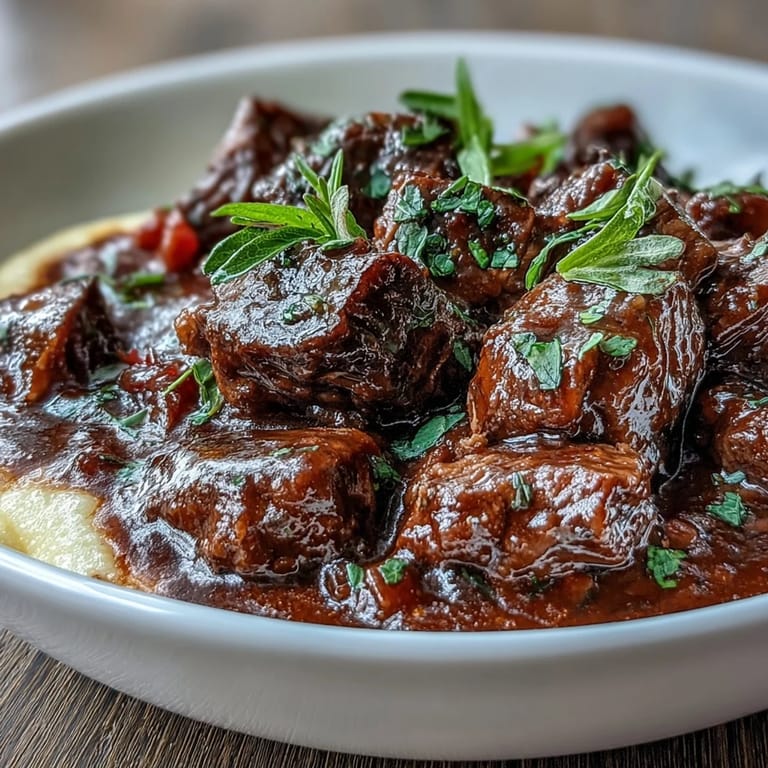
Save There's a moment when you lift the lid after two hours of simmering and the steam rises up, carrying the smell of juniper and slow-cooked meat, that feels like an achievement. This isn't a quick midweek dinner, it's the kind of recipe you save for when you have time to let things unfold properly. I've served it to skeptics who claimed they didn't like game meat, and watched them go quiet as they tasted it, then ask for seconds. It's become my cold-weather answer to everything.
What to Do with Leftovers
The stew tastes even better the next day after the flavors have had time to marry overnight in the fridge. I've reheated it gently on the stove and served it over mashed potatoes, or even stirred through pasta for a richer, gamey ragu. The polenta firms up when cold, so you can slice it, fry it in butter until crispy, and serve the stew on top like a kind of rustic open sandwich. One time I had just a cupful of stew left and folded it into a puff pastry parcel with some mushrooms, which became an incredible little hand pie.
Pairing and Serving Suggestions
A robust red wine is non-negotiable here, something with enough body to stand up to the richness of the venison. I've had great results with Shiraz and Cabernet Sauvignon, but a good Malbec works beautifully too. If you want to stretch the meal, serve it with a simple green salad dressed in sharp vinaigrette to cut through the richness, or some crusty bread to mop up every last bit of sauce. I've also served it family-style in a big shallow bowl with the polenta spread underneath and the stew piled on top, which looks dramatic and encourages everyone to dig in together.
Substitutions and Variations
If you can't get hold of sloe gin, a good-quality port or a berry liqueur like cassis will work, though you'll lose some of that wild hedgerow character. I've made this with beef shin when venison wasn't available, and while it's not quite the same, it's still deeply satisfying. For a richer flavor, add a splash of red wine along with the sloe gin, it deepens the sauce and adds complexity. You can also swap the polenta for creamy mash or even buttered egg noodles if you prefer, though I think polenta's slight graininess is the perfect foil for the silky stew.
- Try adding a handful of dried porcini mushrooms to the stew for an earthy, umami boost.
- If you like heat, a pinch of chili flakes stirred in with the garlic adds a gentle warmth.
- Garnish with crispy fried sage leaves for a restaurant-style finish that takes seconds.
 Save
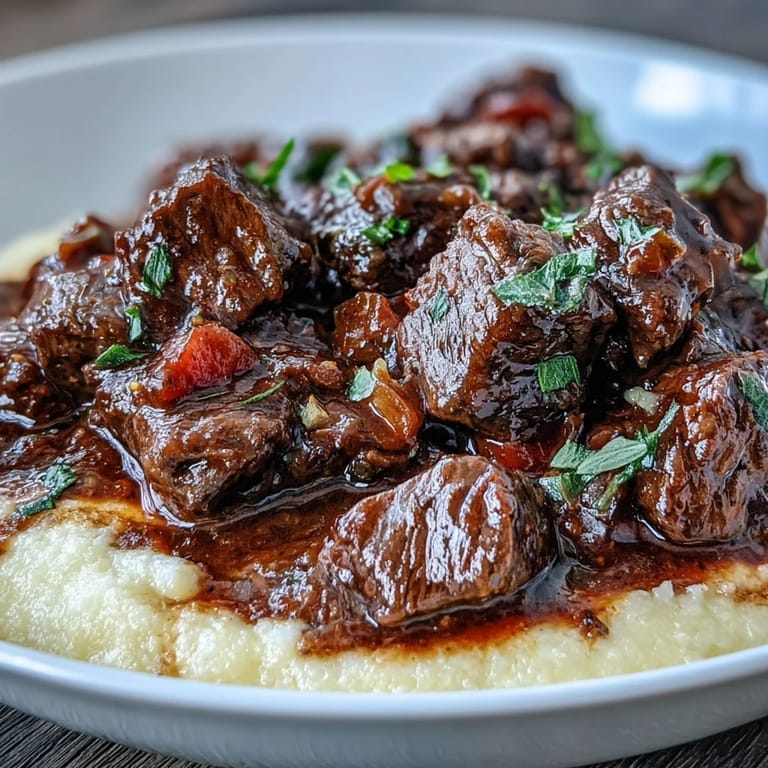
Save This is the kind of recipe that makes you feel capable, even on days when everything else feels uncertain. It asks for patience, rewards attention, and fills your home with the kind of smell that makes people ask what's cooking before they've even taken their coat off.
Recipe FAQs
- → Can I substitute venison with another meat?
Yes, you can use beef chuck, lamb shoulder, or wild boar as alternatives. Cooking times may vary slightly depending on the meat chosen.
- → What can I use instead of sloe gin?
Port, red wine, or berry liqueurs like cassis work well. For a non-alcoholic option, use pomegranate or grape juice with a splash of balsamic vinegar.
- → Can I make this stew ahead of time?
Absolutely. The stew tastes even better the next day as flavors develop. Store in the refrigerator for up to 3 days and reheat gently before serving.
- → What type of polenta should I use?
Quick-cooking polenta works well for weeknight meals (5-10 minutes), while traditional polenta requires 30-40 minutes of stirring but offers a creamier texture.
- → Can I freeze venison stew?
Yes, the stew freezes beautifully for up to 3 months. Cool completely, transfer to airtight containers, and thaw overnight in the refrigerator before reheating.
- → How do I prevent the venison from becoming tough?
Keep the heat low during braising and ensure the stew simmers gently rather than boils. The long, slow cooking breaks down connective tissue, making the meat tender.