 Save
Save My coworker brought one of these bowls to lunch and I couldn't stop watching her eat it—the way those vibrant colors just tumbled together, how she'd mix everything into the rice before each bite. She caught me staring and laughed, sliding a spoonful toward me with a knowing smile. That gochujang-coated beef and the cool crunch of kimchi became my obsession for weeks after, until I finally figured out how to build my own version at home. Now it's the meal I make when I want something that feels restaurant-quality but doesn't demand hours in the kitchen.
I made this for my sister during a busy weeknight when she needed comfort food but I had zero energy for anything complicated. She sat at the counter while I assembled everything, and the way her eyes lit up when I topped her bowl with those sesame seeds—that's when I realized this isn't just a quick dinner, it's the kind of meal that makes people feel seen.
Ingredients
- Lean ground beef: Use the 80/20 blend if you can find it, as the fat renders into the sauce and keeps everything juicy without becoming greasy.
- Gochujang: This Korean chili paste is slightly sweet with serious depth—start with 2 tablespoons and adjust upward if you want more heat, since it varies by brand.
- Soy sauce: The umami backbone that ties everything together; don't skip it or the beef becomes one-dimensional.
- Brown sugar: A tablespoon sounds small but it balances the heat and saltiness into something crave-worthy.
- Garlic and ginger: Mince these finely so they dissolve into the sauce rather than sitting as chunks.
- Toasted sesame oil: The nutty aroma is non-negotiable—never use untoasted, and add it before the beef so it blooms into the garlic and ginger.
- Short-grain rice: Its sticky texture catches the gochujang sauce better than long grains ever could.
- Kimchi: Use the chopped kind if you're nervous about texture, but whole pieces add drama to each bite.
- Sesame seeds: Toast them yourself in a dry pan for two minutes if you have time—it wakes up their flavor completely.
Tired of Takeout? 🥡
Get 10 meals you can make faster than delivery arrives. Seriously.
One email. No spam. Unsubscribe anytime.
Instructions
- Bloom the aromatics:
- Pour sesame oil into your skillet and let it heat until it smells like toasted nuts, then add garlic and ginger. This 60-second window is crucial—you want them fragrant but not brown.
- Brown the beef:
- Crumble the ground beef in and resist the urge to stir constantly; let it sit for a minute so it develops those caramelized edges that add depth. Break it into small pieces as it cooks, about 5 to 6 minutes total.
- Build the sauce:
- The moment the beef is no longer pink, add your gochujang, soy sauce, and brown sugar all at once. Stir everything together and let it bubble gently for 2 to 3 minutes so the flavors meld and the sauce thickens slightly.
- Finish with green onions:
- Stir in half your sliced green onions right before you pull it off the heat, so they stay bright and sharp against the warm, savory beef.
- Assemble your bowls:
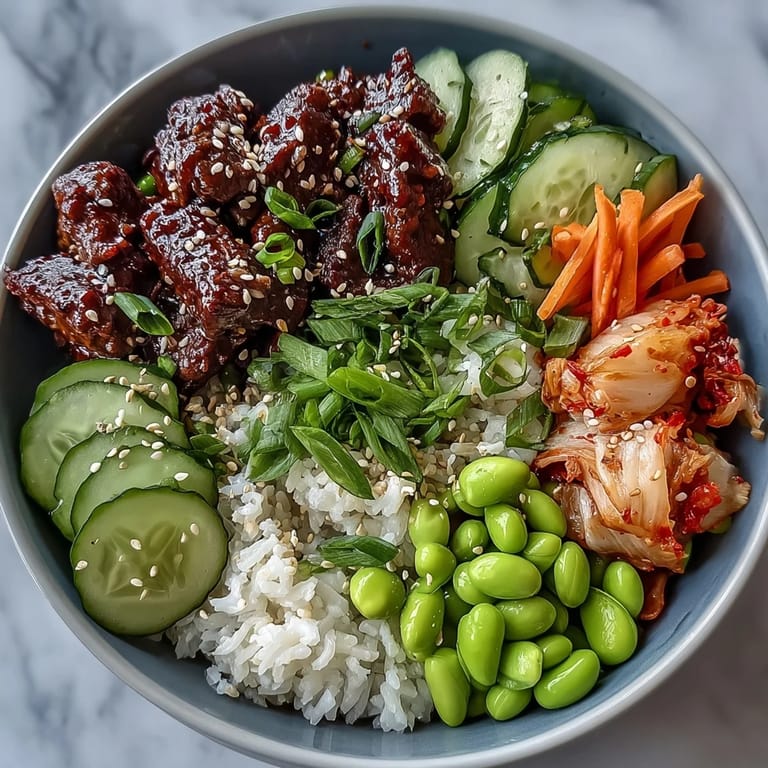
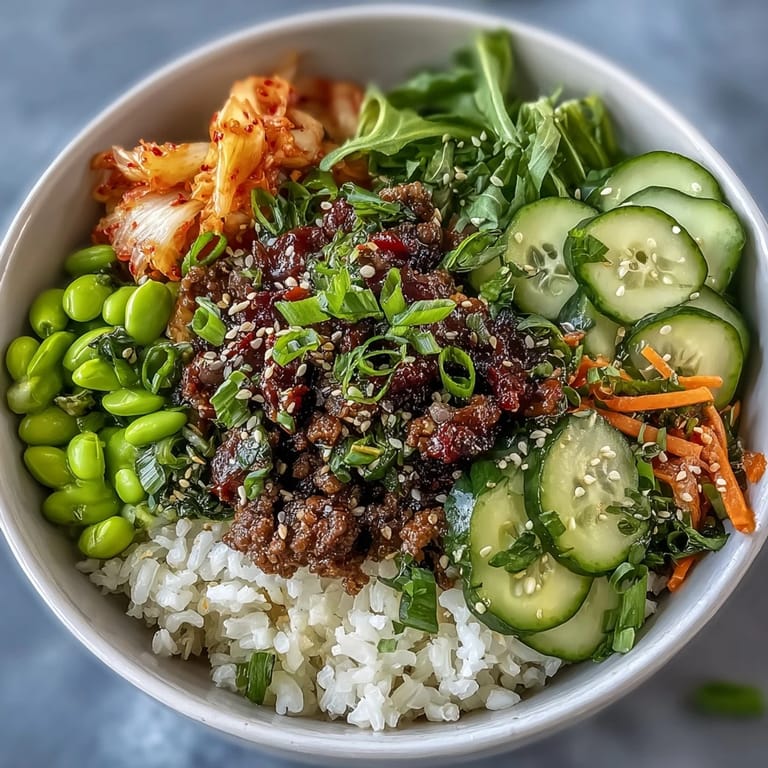
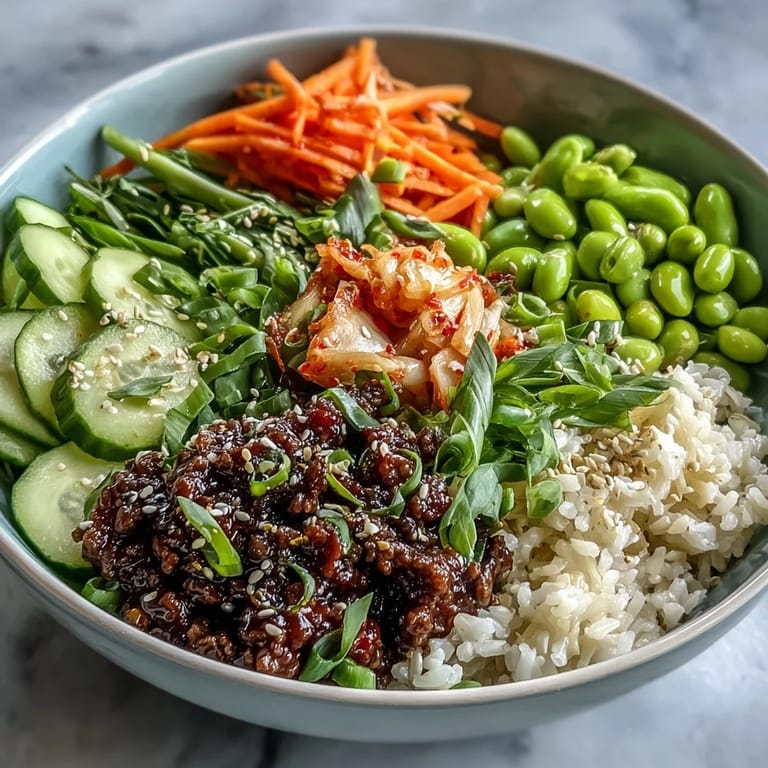
- Start with warm rice as your canvas, then arrange the beef in the center. Scatter edamame, cucumber, carrot, and kimchi around it like you're creating something beautiful, because you are.
- Final flourish:
- Top with the remaining green onions and a generous sprinkle of toasted sesame seeds, then serve immediately while everything's still warm and the vegetables haven't started to wilt.
 Save
Save I'll never forget my neighbor tasting this and immediately asking for the recipe—she said it reminded her of a restaurant near her old apartment in Seoul. Watching someone connect food to memory like that made me realize cooking isn't just about feeding people, it's about giving them a moment to travel somewhere else in their mind.
Why The Flavors Work Together
Gochujang brings heat and funk, soy sauce adds saltiness and savory depth, and brown sugar rounds everything into something almost addictive. The cool, crisp vegetables and tangy kimchi cut through the richness of the beef, so every bite feels balanced rather than heavy. That toasted sesame oil is the secret bridge between everything—it ties the flavors together with a nutty warmth that makes you wonder why more bowls don't use it.
Make It Your Own
This bowl is a foundation, not a rule. I've made it with ground turkey when I wanted something lighter, and honestly it still hits. Some nights I'll add a fried egg on top because the runny yolk becomes an extra sauce, and other times I'll throw in shredded cabbage or radish for more crunch. The beauty is that you're in control of every element, so it never gets boring no matter how often you make it.
Timing and Prep Strategy
If you're cooking rice from scratch, get that going first so it's ready when you need it. While it cooks, prep your vegetables and kimchi so everything's sliced and waiting. The beef itself only takes 10 to 12 minutes from pan to plate, which means you can literally have dinner on the table in the time it takes someone to change out of work clothes.
- Cook your rice while you're prepping vegetables so nothing ever feels rushed.
- Mince your garlic and ginger ahead of time if you're short on patience—it doesn't change the flavor and saves you a step.
- Toast sesame seeds fresh the day you're cooking if possible, but they'll keep in a jar for weeks.
 Save
Save This bowl has become my answer to "what's for dinner" on nights when I need something fast but still feel accomplished. Make it once and you'll understand why it's become a weeknight staple in kitchens everywhere.
Recipe FAQs
- → What is gochujang and how does it affect the flavor?
Gochujang is a Korean chili paste that adds a sweet, spicy, and umami depth, giving the beef a distinctive savory kick.
- → Can I use a different protein instead of ground beef?
Yes, ground turkey, chicken, or plant-based crumbles work well as alternatives without compromising flavor.
- → How can I make this dish spicier or milder?
Adjust the amount of gochujang to increase or decrease the heat according to your preference.
- → What vegetables complement this meal best?
Fresh vegetables like cucumber, carrot, edamame, and kimchi provide crispness, freshness, and a tangy contrast.
- → Is there a recommended garnish to finish the bowl?
Toasted sesame seeds and green onions add a nutty aroma and bright notes to complete the dish.