 Save
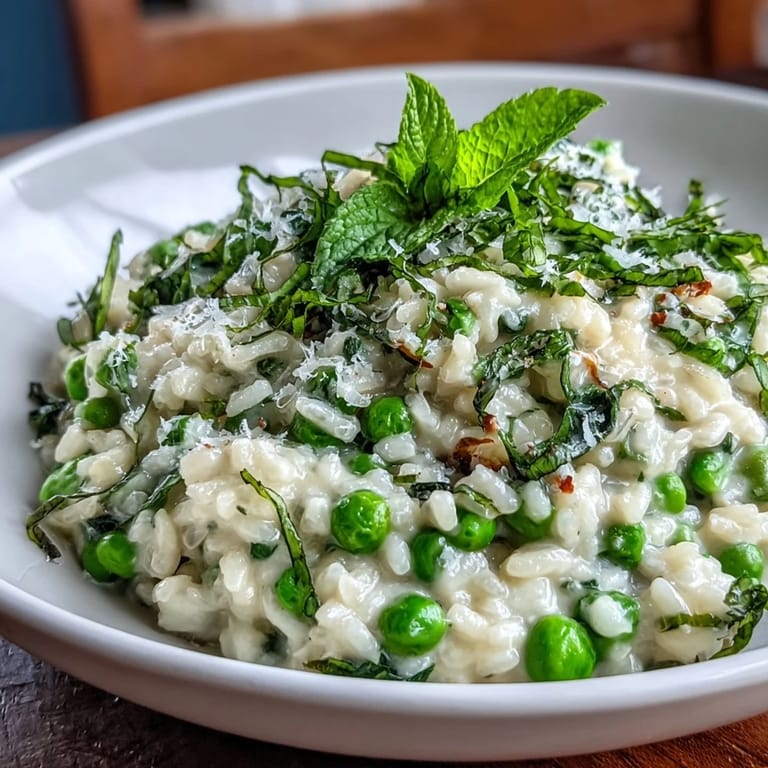
Save My neighbor knocked on the kitchen door one April evening with an armful of fresh peas from her garden, still in their pods, and challenged me to do something interesting with them that night. I had guests arriving in two hours, so I found myself standing at the stove stirring risotto while the smell of butter and mint filled the whole house. It was one of those magical cooking moments where everything came together—the bright green peas, the creamy rice, the way the lemon zest caught the evening light in the pot. That dinner party became the reason I now make this risotto every spring.
I've served this to people who claim they don't eat risotto, convinced it's too heavy or fussy, and they always ask for seconds. There's something about the combination of spring freshness and creamy indulgence that makes everyone feel like they're eating something special, even though you're standing there casually stirring and sipping wine.
Ingredients
- Fresh or frozen green peas (1 cup, 150 g): Fresh peas from the market or garden are incredible, but frozen peas are honestly just as good and sometimes fresher since they're picked and frozen at peak ripeness.
- Small onion, finely chopped: The base of everything—keep your pieces small and even so they cook uniformly and disappear into the butter.
- Garlic cloves, minced (2): Just enough to add a gentle whisper of flavor without overpowering the delicate spring vegetables.
- Arborio rice (1 1/2 cups, 300 g): This short-grain rice has a higher starch content than others, which is what creates that signature creamy texture without needing cream.
- Vegetable stock, kept warm (4 cups, 1 L): Keep it simmering on a back burner—cold stock will shock the rice and interrupt the cooking process.
- Dry white wine (1/2 cup, 120 ml): Don't use cooking wine; use something you'd actually drink, as the flavor becomes part of the dish.
- Unsalted butter, divided (3 tbsp): The first two tablespoons toast the rice and soften the vegetables, while the final tablespoon stirred in at the end creates silkiness.
- Freshly grated Parmesan cheese (1/2 cup, 40 g): Grate it yourself right before cooking—pre-grated cheese has anti-caking agents that prevent it from melting smoothly.
- Fresh mint leaves, finely chopped (1/4 cup, 10 g): This is where the magic happens; the mint stays bright and aromatic because you add it after cooking.
- Fresh flat-leaf parsley (2 tbsp): Optional, but it adds a subtle earthiness that lets the mint shine without competition.
- Salt and freshly ground black pepper: Taste as you go—the stock and Parmesan already contribute saltiness, so go easy at first.
- Lemon zest (from 1 lemon): This tiny detail lifts the entire dish, adding brightness that tricks people into thinking you spent all day cooking.
Tired of Takeout? 🥡
Get 10 meals you can make faster than delivery arrives. Seriously.
One email. No spam. Unsubscribe anytime.
Instructions
- Soften the aromatics:
- Melt two tablespoons of butter in your large saucepan over medium heat, then add the finely chopped onion. Let it cook gently until it becomes soft and translucent—you'll notice the pieces start to disappear and the whole pot smells sweet. Stir in the garlic and cook for about a minute until fragrant, watching that it doesn't brown.
- Toast the rice:
- Pour in the Arborio rice and stir it constantly for about two minutes, coating every grain in the buttery mixture. You want the rice to look slightly translucent at the edges with a white center—this toasting step is what creates that subtle depth of flavor.
- Add the wine:
- Pour in your white wine and keep stirring as it bubbles and reduces into the rice. The liquid will nearly disappear, and you'll smell something wonderful as the wine cooks down, maybe a minute or two total.
- Build the creaminess:
- This is the rhythm of risotto—add one ladle of warm stock and stir almost constantly, waiting until most of the liquid is absorbed before adding the next ladleful. This usually takes about 18 to 20 minutes and requires your presence and attention, but it's a meditative kind of cooking. The rice gradually becomes creamy as its starches release into the liquid, transforming it into something silky.
- Introduce the peas:
- During the last five minutes of cooking, stir in your peas and let them heat through gently. They'll stay bright green and perfectly tender because they're only in the hot risotto for a brief moment.
- Finish with finesse:
- Remove the pan from heat and stir in the remaining tablespoon of butter, the grated Parmesan, the chopped mint, parsley if you're using it, and the lemon zest. Mix everything together until it looks creamy and luxurious, tasting and adjusting the salt and pepper to your preference.
- Serve with joy:
- Plate the risotto immediately while it's hot and creamy, topping each serving with extra Parmesan and a few fresh mint leaves.
 Save
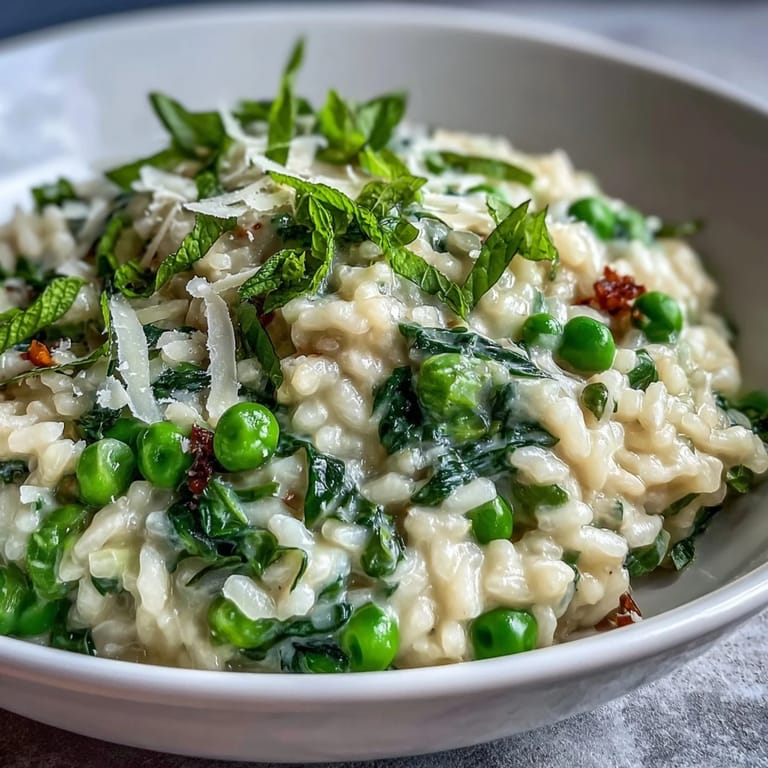
Save The first time I served this at a dinner party, one guest turned to me midway through eating and said, "I can taste spring in this." That comment stuck with me more than any recipe review ever could because it captured exactly what risotto does—it's not just food, it's a season captured in a bowl.
The Secret of Stock Temperature
I learned this lesson the hard way when I grabbed cold stock from the fridge and wondered why my risotto took forever to cook and never quite reached that creamy state. Now I keep my stock simmering on a back burner throughout cooking, and the difference is night and day. When each new addition of stock is warm, it continues the cooking process instead of interrupting it, and your rice becomes genuinely creamy instead of gluey.
Mint as the Star, Not the Supporting Actor
Most of my failed risottos happened when I added the mint too early, and it lost all its brightness and became dull by the time the dish was served. Now I wait until the very end, stirring it in after the pan leaves the heat, so it keeps its personality and actually tastes fresh. The timing makes all the difference between a risotto that tastes pretty and one that tastes like spring.
Making It Your Own
This risotto is a foundation that welcomes your own touches—I've made versions with asparagus, with pea shoots stirred in at the end, with a touch of white truffle oil drizzled over the top. The ratio of rice to stock stays the same, but the vegetables and finishing touches can change with what you find at the market or what's growing in your garden.
- A tiny drizzle of really good olive oil over the finished risotto adds a luxurious richness that brings everything into focus.
- If you can't find fresh mint, fresh basil works beautifully, or even a handful of arugula stirred in at the very end for a peppery twist.
- This dish is best served immediately while it's still hot and has that perfect creamy flow, so time your dinner party accordingly.
 Save
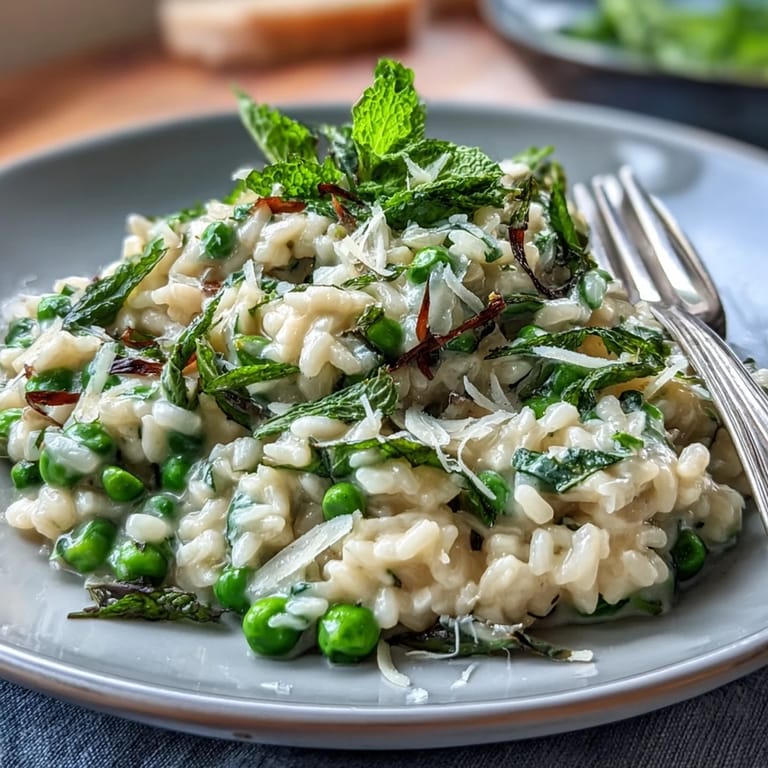
Save When spring arrives and you want to cook something that feels special without being stressful, this risotto is your answer. It's become my go-to way of celebrating fresh vegetables and impressing people without fuss.
Recipe FAQs
- → Can I use frozen peas instead of fresh?
Yes, frozen peas work well when fresh ones aren't available. Add them during the last few minutes of cooking to keep their color and texture.
- → What wine pairs best with this dish?
A crisp white wine such as Sauvignon Blanc or Pinot Grigio complements the creamy texture and fresh flavors excellently.
- → How do I achieve a creamy texture?
Gradually ladle warm vegetable stock into the rice while stirring continuously until it's creamy and the rice is al dente.
- → Can I make this dish vegan?
To make it vegan, substitute butter with plant-based margarine and omit or replace Parmesan with a vegan alternative.
- → Is it necessary to use white wine in cooking?
White wine adds depth and acidity but can be replaced with additional warm stock if preferred.