 Save
Save My first real jambalaya came together almost by accident on a humid August afternoon when my neighbor dropped off a bag of andouille sausage from a butcher she swore by. I'd been intimidated by Creole cooking for years, thinking it required some secret knowledge I didn't possess, but watching that sausage hit the hot oil and fill my kitchen with smoke and spice, I realized it was just about layering flavors and trusting the process. That one pot became my gateway into understanding why this dish has fed families across Louisiana for generations.
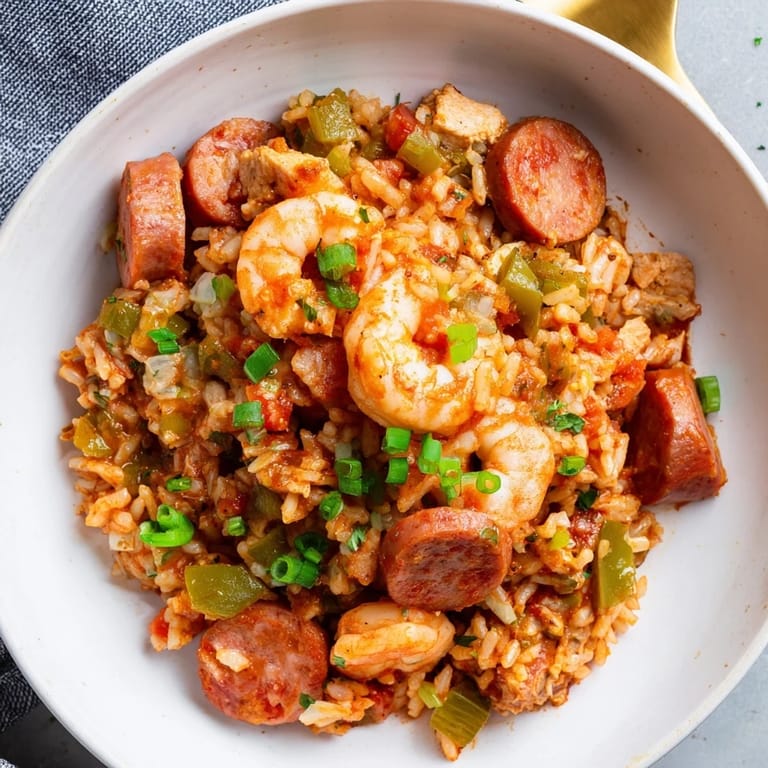
I made this for friends who'd never had proper jambalaya, and I watched their faces light up when they tasted that first spoonful—the way the rice held all that smoky, spicy broth, the tender chicken, the pop of the shrimp. One friend asked if I'd learned to cook in New Orleans, and I laughed because I'd learned it right here in my own kitchen, standing over a pot that smelled like Saturday night and tasted like home.
Ingredients
- Andouille sausage (225 g / 8 oz, sliced): This smoky, spiced sausage is the backbone of jambalaya's flavor; don't skip it or swap it for regular sausage, though kielbasa works if andouille isn't available.
- Boneless, skinless chicken thighs (250 g / 9 oz, cut into 2 cm pieces): Thighs stay juicy and tender through the cooking process, unlike breast meat which can dry out in the one-pot environment.
- Large raw shrimp (225 g / 8 oz, peeled and deveined): Add these near the end so they stay plump and don't turn rubbery; frozen shrimp work perfectly if fresh aren't available.
- Onion, green bell pepper, and celery (1 medium onion, 1 pepper, 2 stalks): This holy trinity of Creole cooking builds the aromatic base that makes everything taste intentional.
- Garlic (3 cloves, minced): Add it after the softer vegetables so it doesn't burn and turn bitter in the hot oil.
- Diced tomatoes (1 can, 400 g / 14 oz with juices): Canned tomatoes work beautifully here because their acidity balances the spice and richness of the sausage.
- Long-grain white rice (300 g / 1½ cups, rinsed): Rinsing removes excess starch so the rice stays separate and fluffy rather than gluey.
- Chicken broth (720 ml / 3 cups): Use good-quality broth; it's the base that carries all the spice and flavor into every grain of rice.
- Smoked paprika (1½ tsp): This is where the jambalaya gets its signature smoky depth that feels like it's been cooking all day.
- Dried thyme and oregano (1 tsp each): These herbs tie the whole dish together with an earthy, slightly Mediterranean undertone that plays beautifully with Cajun spice.
- Cayenne pepper (1 tsp, adjust to taste): Start with this amount and add more if you like heat; you can always increase but you can't take it back.
- Black pepper and salt (½ tsp and 1 tsp): Season gradually throughout cooking rather than all at once, tasting as you go.
- Bay leaves (2): Remove these before serving; they perfume the whole pot as it simmers.
- Vegetable oil (2 tbsp): Use a neutral oil with a high smoke point so you can get a proper sear on the proteins.
Tired of Takeout? 🥡
Get 10 meals you can make faster than delivery arrives. Seriously.
One email. No spam. Unsubscribe anytime.
Instructions
- Sear the sausage until it releases its smoke:
- Heat 1 tablespoon oil in a large heavy-bottomed pot over medium-high heat and add the sliced sausage. You're looking for the edges to crisp and brown, which takes about 3 to 4 minutes; this step renders out the fat and deepens the flavor. Remove it to a plate and let it rest while you move to the chicken.
- Brown the chicken on all sides:
- Add the remaining oil and season the chicken pieces with a pinch of salt and pepper. Let each piece sit undisturbed for a minute or two before stirring so it develops a golden crust, about 4 to 5 minutes total. Remove the chicken and set it with the sausage; you're not cooking it through yet, just building color and flavor.
- Build the base with aromatics:
- Add the onion, bell pepper, and celery to the pot and stir frequently until they soften and the onion turns translucent, about 5 minutes. Add the minced garlic and cook for just 1 minute more; any longer and it risks burning.
- Toast the spices in the rice:
- Stir in the rinsed rice along with the smoked paprika, thyme, oregano, cayenne, black pepper, and salt. Cook for 1 minute, stirring constantly, so the spices bloom and coat every grain with oil and heat. You'll smell the transformation happen.
- Add liquids and bring everything together:
- Pour in the diced tomatoes with their juices and the chicken broth, then scrape the bottom of the pot with a wooden spoon to loosen all the caramelized bits. Add the bay leaves and stir well, then return the sausage and chicken to the pot.
- Simmer gently until the rice is nearly tender:
- Bring the pot to a boil, then reduce the heat to low and cover it tightly. Let it simmer for 20 minutes, stirring once halfway through so nothing sticks to the bottom. The rice will absorb the liquid and the chicken will cook through gently.
- Nestle in the shrimp for the final minutes:
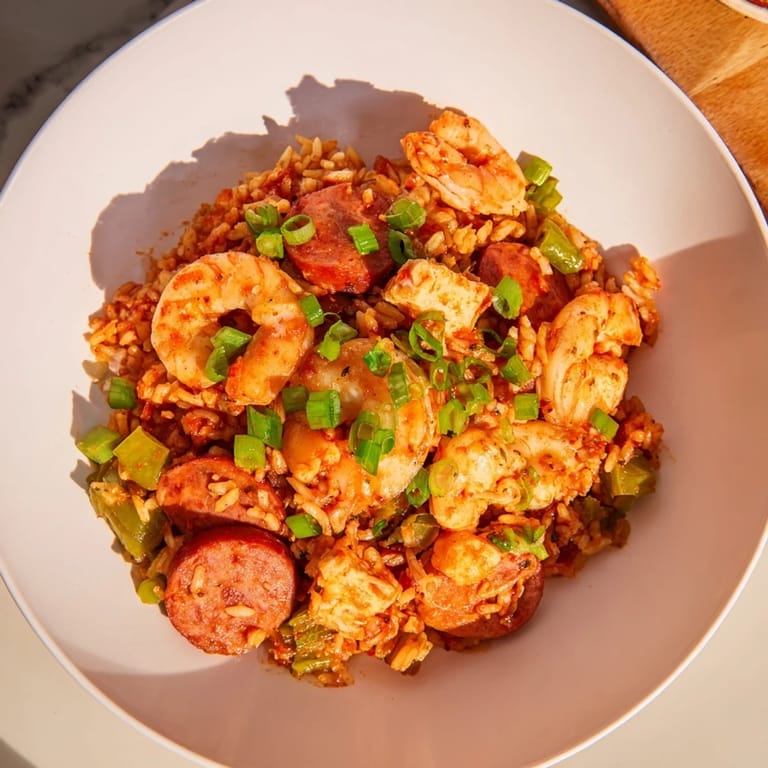
- Open the pot and push the shrimp down into the rice so they're nestled in the hot liquid. Cover again and cook for 5 to 7 minutes until the shrimp turn pink and the rice is tender. Don't walk away during this step; shrimp cook quickly and you want to catch them the moment they're done.
- Finish and serve with care:
- Remove the pot from heat and discard the bay leaves. Use a fork to fluff the jambalaya gently, separating the grains and distributing the proteins evenly. Garnish with sliced spring onions and fresh parsley, then serve hot with hot sauce on the side for anyone who wants more fire.
 Save
Save I realized jambalaya isn't just a recipe; it's a rhythm. Once you understand how to layer the flavors and respect the timing, you can make it confidently and serve something that tastes like it took all day, even though it only took an hour.
Building Layers of Flavor
The magic of jambalaya is in the sequence. Each step adds complexity that builds on what came before—the sausage renders fat for flavor, the chicken gets sealed in that fat, the vegetables soften and release their sweetness, the spices toast and come alive. If you rush or skip steps, the dish still works, but it feels flat. When you slow down and respect each layer, you taste the difference immediately.
Adjusting Heat and Spice
Cayenne pepper is straightforward but also personal—start with the amount called for and taste a spoonful of the finished dish before serving. If you like more heat, stir in extra cayenne or offer hot sauce at the table so guests can customize their own bowls. I've learned that the best jambalaya respects everyone's spice tolerance rather than imposing one version as the only way.
Making It Your Own
Once you've made this jambalaya a few times, you'll start noticing small tweaks that make it feel more like yours. Maybe you add okra for body, or diced jalapeños for brightness, or swap the shrimp for more sausage if that's what your family loves. The skeleton of the recipe is solid, but the soul is flexible.
- Omit the shrimp entirely for a pure chicken-and-sausage version that's equally delicious and needs no other changes.
- Stir in diced okra in the last 5 minutes of cooking if you want a thicker, more Southern texture.
- Taste and adjust salt at the end rather than early; broth and sausage are both salty and flavors concentrate as liquid reduces.
 Save
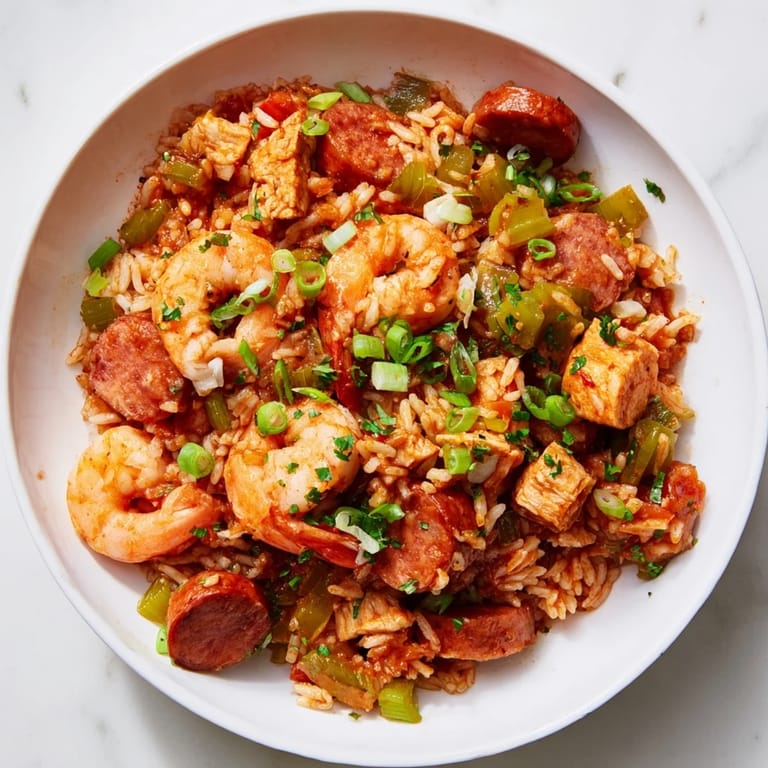
Save There's something deeply satisfying about one pot, one hour, and a meal that tastes like you've been cooking all day. Make this jambalaya and you'll understand why it's a keeper.
Recipe FAQs
- → What proteins are used in this dish?
It includes chicken thighs, andouille sausage, and large raw shrimp for a balanced combination of flavors and textures.
- → Can the sausage be substituted?
Yes, smoked kielbasa or chorizo can be used as alternatives to andouille sausage without losing the dish's characteristic smoky flavor.
- → How is the dish seasoned?
A blend of smoked paprika, thyme, oregano, cayenne pepper, black pepper, and bay leaves infuses the meal with bold Cajun flavors.
- → What cooking method is recommended?
This meal is prepared in one pot or Dutch oven, where ingredients are browned, then simmered together to let flavors meld while the rice cooks.
- → Are there spice adjustments possible?
For more heat, the cayenne pepper can be increased or fresh jalapeños added to enhance the spiciness to taste.
- → What garnishes complement this dish?
Fresh spring onions and chopped parsley add color and a touch of freshness when sprinkled on top before serving.
- → What side dishes work well alongside?
Traditional pairings include cornbread or a crisp green salad to round out the hearty meal.