 Save
Save My mom's kitchen always smelled like warm butter and buttermilk on Sunday mornings, and I spent years watching her biscuits rise in the oven before I finally understood the magic was just cold hands, patience, and not overthinking it. The first time I made them alone, I somehow managed to overmix the dough and ended up with dense, tough rounds that felt more like hockey pucks than breakfast, which taught me everything about restraint. Now, these biscuits are my answer to almost everything—a lazy Saturday, unexpected guests, or when I need something that tastes like comfort without the fuss.
I made these for a potluck once where someone had forgotten the bread entirely, and I watched a whole table of people abandon their other dishes halfway through just to get another warm biscuit with honey. That's when I realized these weren't just a side dish—they were the thing people actually remembered eating.
Ingredients
- All-purpose flour (2 cups): The foundation, and using cold ingredients with warm hands means you need to work fast to keep the flour from clumping.
- Baking powder (1 tablespoon): This is what makes them rise, so don't skip it or substitute—old baking powder loses its lift, so check the date on the tin.
- Baking soda (½ teaspoon): Works alongside the baking powder and reacts with the buttermilk's acid to give that tender crumb.
- Fine sea salt (1 teaspoon): Brings out the butter flavor and balances the sweetness without tasting salty.
- Granulated sugar (1 tablespoon): Just enough to enhance the buttery flavor, not enough to make them sweet.
- Cold unsalted butter (½ cup, cubed): This is non-negotiable—warm butter melts into the flour and you lose the flaky layers that make these special.
- Cold buttermilk (¾ cup, plus extra for brushing): The acidity tenderizes the dough, and cold means faster handling so the butter stays in little pockets.
Tired of Takeout? 🥡
Get 10 meals you can make faster than delivery arrives. Seriously.
One email. No spam. Unsubscribe anytime.
Instructions
- Set your oven to hot:
- Preheat to 425°F and line a baking sheet with parchment paper. A hot oven is key—it creates steam that lifts the biscuits tall and golden.
- Mix the dry team:
- Whisk flour, baking powder, baking soda, salt, and sugar together in a large bowl. This distributes the leavening evenly so every biscuit rises the same way.
- Cut in the cold butter:
- Add cubed cold butter and work it in with a pastry cutter or your fingertips until it looks like coarse crumbs with pea-sized butter pieces still visible. The pockets of butter create steam and flakiness as they bake.
- Add the buttermilk gently:
- Make a well in the center, pour in cold buttermilk, and stir with a fork until just barely combined. Overmixing develops gluten and makes them tough, so stop as soon as you don't see dry flour.
- Fold for layers:
- Turn the dough onto a lightly floured surface and gently pat it into a ½-inch thick rectangle. Fold it in half, pat it out again, and repeat this folding 2 more times—this creates the flaky layers everyone loves.
- Cut and shape:
- Pat the dough to 1 inch thick and cut biscuits with a 2½-inch round cutter, pressing straight down without twisting. Twisting seals the edges and prevents them from rising properly, so straight pressure is everything.
- Brush and bake:
- Place biscuits close together on the baking sheet, brush tops lightly with buttermilk, and bake for 13–15 minutes until tall and golden brown. The close placement helps them rise up instead of spreading out.
- Rest before serving:
- Cool for a few minutes before eating warm—they're still setting up, and that first bite is always the best.
 Save
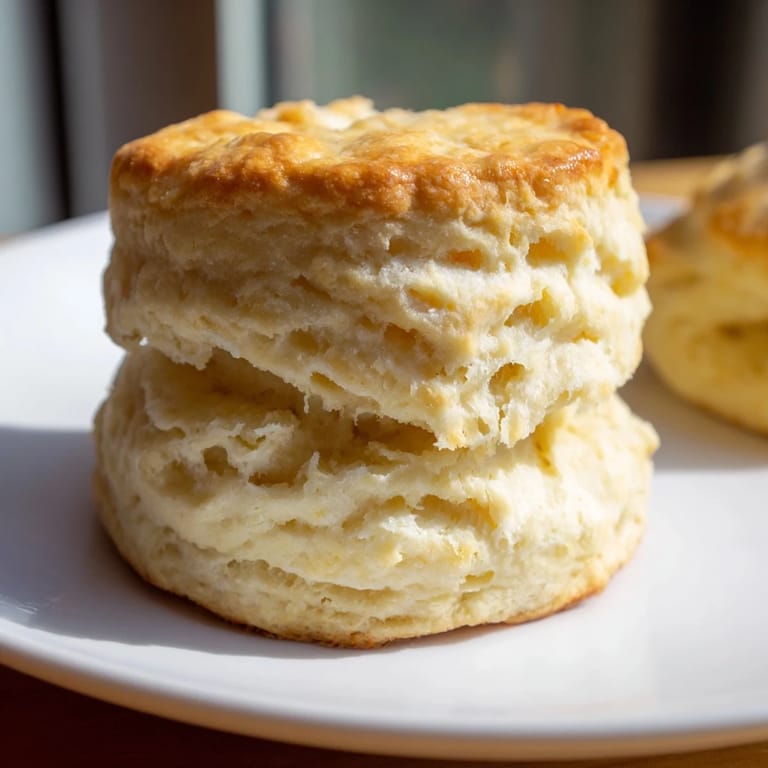
Save There's a moment when you pull the baking sheet out of the oven and the whole kitchen fills with that warm butter smell—that's when it clicks that you've made something that tastes like home. My dad always eats his with a little honey and a cup of strong coffee, and watching him enjoy something I made is worth every cold-handed minute of folding.
The Folding Secret
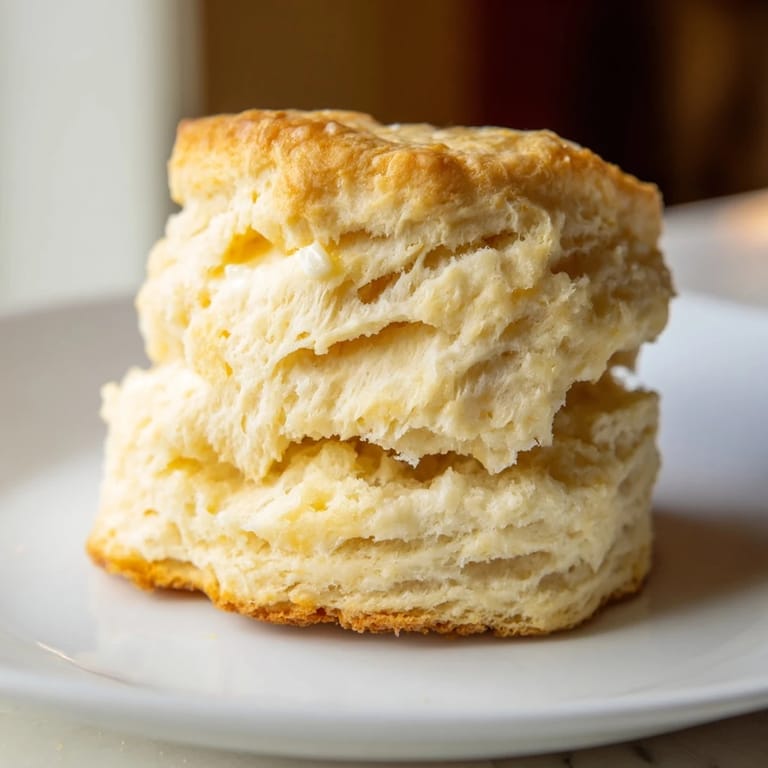
The folding step confused me at first because it felt like I was undoing all my work, but it's actually the difference between a dense biscuit and a biscuit with real flaky layers that separate as you pull them apart. Each fold presses the dough slightly, creating thin sheets of flour with butter sandwiched between them, and when the heat hits, the butter melts and the steam lifts those sheets apart. It's a small technique that makes the whole difference, and once you see those layers in the baked biscuit, you'll understand why it matters.
Making Them Your Own
The base recipe is perfect as is, but the beauty of a good biscuit dough is that it takes to additions beautifully if you want to make them savory or more interesting. I've added sharp cheddar, fresh chives, a pinch of black pepper, even cracked red pepper for heat—just stir any additions into the dry ingredients before you add the butter so they distribute evenly. The key is not to go overboard; biscuits are about the butter and the flakiness, so any add-ins should complement rather than compete.
Serving and Storage
Serve these warm from the oven with honey, jam, or alongside fried chicken and gravy—they're the vehicle that makes everything taste better. Leftovers stay soft for a day in an airtight container, and you can refresh them by wrapping loosely in foil and warming in a 350°F oven for a few minutes if they've gone stale.
- If you don't have buttermilk on hand, mix ¾ cup milk with 2 teaspoons of lemon juice or vinegar, let it sit for 5 minutes, and it becomes a perfect substitute with the same acidic kick.
- Keep your biscuit cutter clean and dry between cuts, or the dough will stick and drag as you press down.
- Gather up the scraps gently and re-pat them to thickness before cutting again—the less handling, the better the texture.
 Save
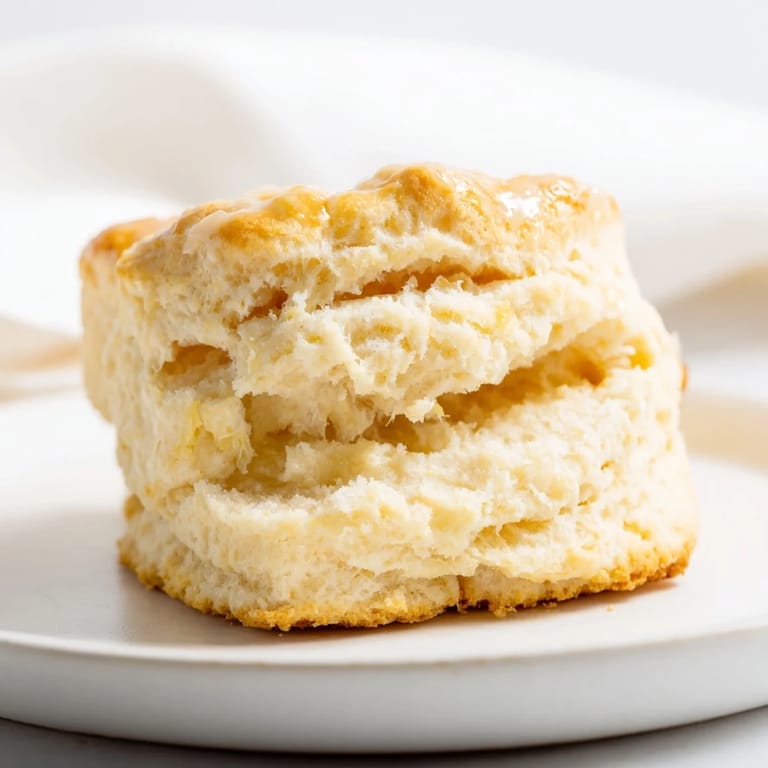
Save These biscuits have become my go-to when I want to make someone feel welcomed or cared for, because there's something about warm, buttery, flaky bread that says more than words ever could. Once you master them, you'll find yourself making them again and again.
Recipe FAQs
- → What creates the flaky layers in these biscuits?
Folding the dough multiple times with cold butter creates distinct layers, which results in a flaky texture when baked.
- → Can I substitute buttermilk if unavailable?
Yes, mix milk with lemon juice or vinegar and let it sit for 5 minutes to mimic the acidity of buttermilk.
- → How do I prevent the biscuits from becoming tough?
Avoid overmixing the dough; gently stir until just combined to keep them tender and soft.
- → What baking temperature ensures the best rise and color?
Baking at 220°C (425°F) allows the biscuits to rise tall and develop a golden brown crust.
- → Can I add flavors to the biscuits?
Yes, adding grated cheddar, fresh herbs, or a pinch of black pepper enhances flavor without compromising texture.