 Save
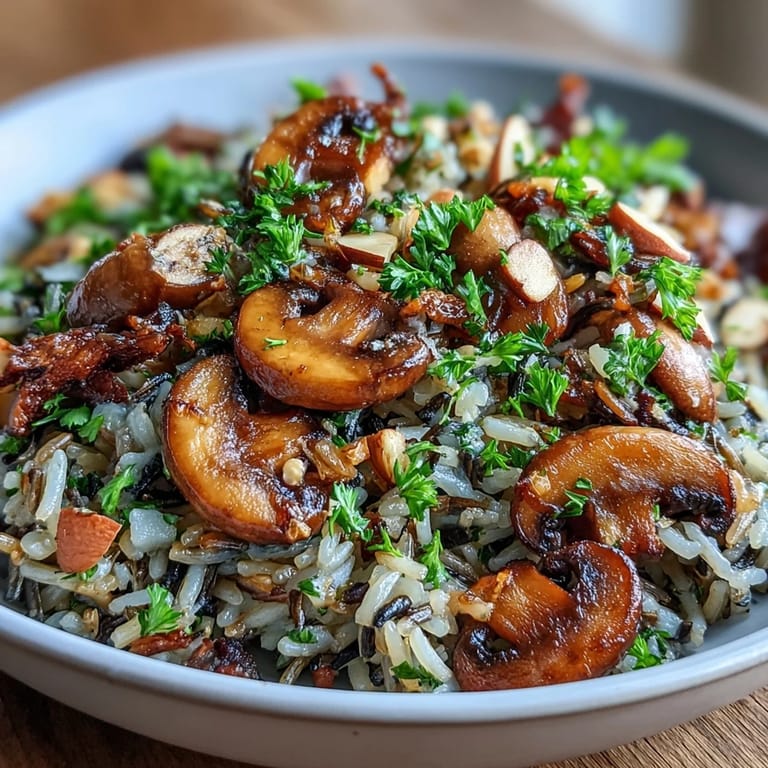
Save Wild rice showed up in my kitchen one autumn when a friend brought a bag from Minnesota, insisting it was nothing like the white rice I usually made. I was skeptical until I actually tasted it—nutty, chewy, almost alive compared to what I'd known. That first pilaf, scattered with mushrooms I'd sautéed until they turned golden and concentrated, became something I craved all through fall. Now whenever I make it, that same earthy aroma fills the kitchen and reminds me why I stopped being skeptical about trying new things.
I made this for my sister's book club last winter when she asked me to bring something that didn't require reheating at her place. I remember being slightly nervous about whether the timing would work—she had maybe two burners available—but everything came together perfectly. When everyone went back for seconds and one person asked for the recipe right there at the table, I knew this pilaf was the kind of dish that quietly impresses without any fuss.
Ingredients
- Wild rice: Rinsing this first matters more than you'd think because there's often debris hiding in there, and you want the finished pilaf to taste clean and pure, not gritty.
- Low-sodium vegetable broth: Go low-sodium so you control the salt level yourself—I learned this the hard way with an oversalted batch that I couldn't fix.
- Olive oil: Use a good one you actually like the taste of, since you're not cooking it until it breaks down, so the quality shows through.
- Yellow onion: Chop it finely so it softens completely and distributes its sweetness throughout, creating a flavor base that holds everything together.
- Garlic: Fresh and minced, added after the softer vegetables so it doesn't burn and turn bitter while the onions finish cooking.
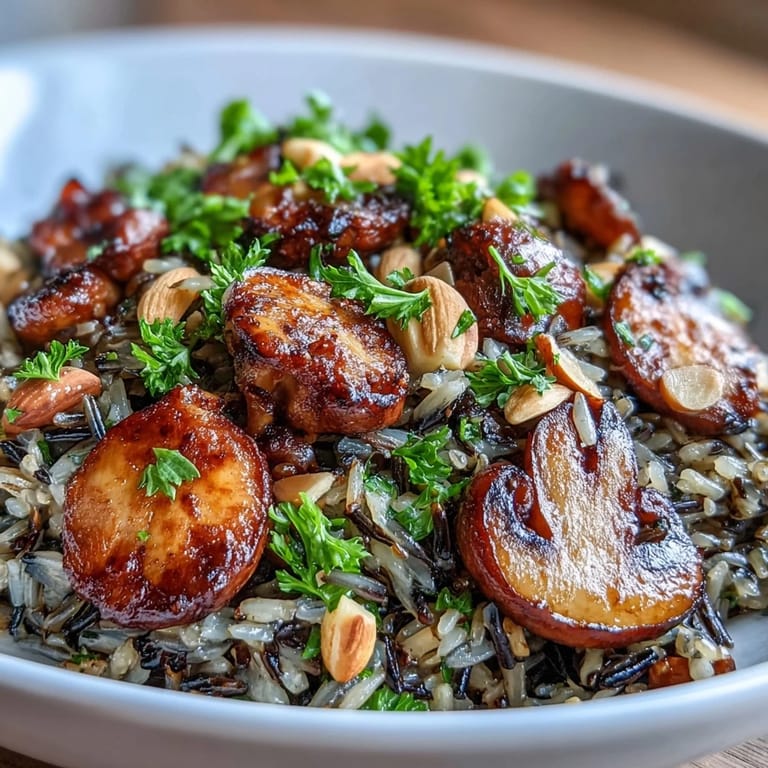
- Cremini or button mushrooms: These absorb the heat and release their moisture, concentrating their earthy flavor into something almost caramelized by the end.
- Celery and carrot: Together they're a flavor partnership that brings sweetness and structure, and the small dice means they soften in time with everything else.
- Fresh thyme and bay leaf: Thyme adds a subtle woodsy note that makes wild rice taste even more like itself, while the bay leaf whispers in the background without announcing itself.
- Salt and black pepper: Taste as you go because the broth already has some sodium, and you'll know better than any recipe when it needs one more pinch.
- Fresh parsley: This is your last-minute brightness, the final reminder that this is a fresh dish, not a heavy one, so don't skip it.
- Toasted slivered almonds: Optional but they add a textural contrast and a slight nuttiness that echoes the wild rice itself in a way that feels purposeful rather than random.
Tired of Takeout? 🥡
Get 10 meals you can make faster than delivery arrives. Seriously.
One email. No spam. Unsubscribe anytime.
Instructions
- Start the rice in simmering broth:
- Bring your liquid to a boil first, then add the rinsed wild rice, reduce the heat down low, and cover it. The steam does the actual work while you move on to everything else, so don't peek too much or you'll let the heat escape.
- Build your flavor base:
- Heat that olive oil until it shimmers, then add your chopped onion, celery, and carrot. Let them soften for five or six minutes, stirring now and then, until they're almost translucent and the kitchen smells intentional.
- Introduce the mushrooms:
- Add your minced garlic first for just a moment so it releases its aroma, then tumble in the sliced mushrooms. Stir occasionally and let them release their moisture, which will evaporate and concentrate their flavor into something deeper and more savory than when you started.
- Season and marry the flavors:
- Sprinkle in your thyme and add that bay leaf, then taste and adjust with salt and pepper. Cook for just a minute more so everything gets acquainted, then fish out the bay leaf before it steals the show.
- Bring it together:
- Once your rice is tender and has absorbed most of its liquid, fold it gently into the mushroom mixture using a wooden spoon so the grains stay intact. Stir until the rice is distributed evenly and everything looks like one unified dish rather than two separate components.
- Finish and serve:
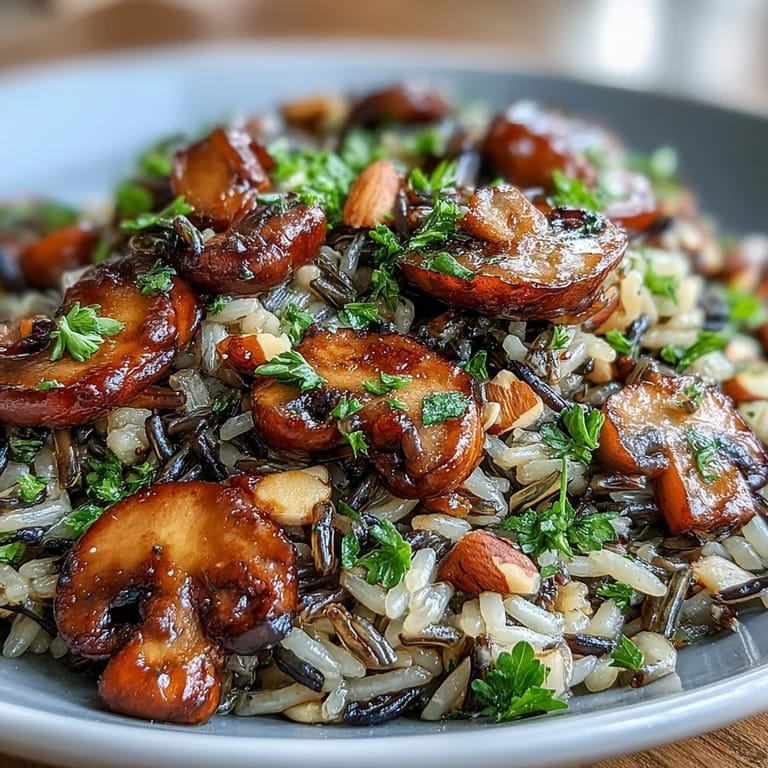
- Transfer everything to your serving dish while it's still warm, scatter your chopped parsley across the top, and add those toasted almonds if you've got them. Serve it immediately while the warmth and aromas are still going strong.
 Save
Save There was this moment when I made this for my parents and my dad, who's never impressed by anything I cook, took a second helping without being asked. He didn't say much, just kept eating, and somehow that quiet approval meant more than any compliment ever could. That's when I realized this pilaf had become one of those recipes that does its job without needing recognition—it just shows up and feeds people in a way that feels both simple and somehow special.
The Magic of Wild Rice
Wild rice isn't actually rice at all, which I didn't know until I started cooking with it regularly. It's the seed of a grass native to North America, and that's why it has that chewy, almost nutty quality that regular rice can never quite achieve. Once you understand that, you stop treating it like a rice substitute and start appreciating it for exactly what it is—something with its own personality that pairs beautifully with earthy elements like mushrooms and thyme.
Playing with Variations
The beauty of this pilaf is how flexible it actually is, even though the basic version is already perfect. I've added a splash of dry white wine when the mushrooms were halfway cooked, which deepened everything, and I've mixed half wild rice with brown rice when I wanted something less expensive but equally delicious. You could stir in some toasted pecans instead of almonds, or add a handful of dried cranberries for a touch of tartness that cuts through the earthiness.
Timing and Make-Ahead Options
This dish comes together in roughly an hour from start to finish, which is honest timing that accounts for actual cooking, not just staring at pots. I've made it ahead and reheated it gently with a splash of extra broth, and while it's not quite as vibrant as when it's freshly made, it's still genuinely good. The best part is that you can do all your chopping while the rice cooks, so you're never standing around with nothing to do, and you finish right when you're ready to serve.
- Taste the pilaf before serving and add one more pinch of salt or pepper if it needs it, because seasoning is always a personal preference.
- Keep the bay leaf visible while you're cooking so you remember to remove it before serving, or it will end up in someone's bowl and ruin their whole experience.
- Serve this warm but not screaming hot, so the flavors actually register on your palate instead of just heat overwhelming everything.
 Save
Save This pilaf is the kind of recipe that becomes a quiet favorite, the one you make when you want to feed people something real without making it complicated. It's vegetarian, it's naturally gluten-free, and it tastes like you actually care, which you do.
Recipe FAQs
- → What makes wild rice different from regular rice?
Wild rice is actually a semi-aquatic grass rather than true rice. It has a distinct nutty flavor, chewy texture, and longer grains that hold their shape well during cooking. The outer hull splits open when cooked, revealing the tender interior.
- → Can I prepare this pilaf ahead of time?
Yes, this pilaf reheats beautifully. Cook the wild rice and vegetable mixture separately, then combine when ready to serve. Store in an airtight container in the refrigerator for up to 3 days. Reheat gently with a splash of water or broth to refresh the texture.
- → What mushrooms work best in this dish?
Cremini or button mushrooms are ideal for their earthy flavor and meaty texture. For more variety, try combining cremini with shiitake or adding dried porcini mushrooms reconstituted in the cooking liquid for extra depth.
- → Is wild rice gluten-free?
Yes, wild rice is naturally gluten-free. Just ensure your vegetable broth is certified gluten-free, as some brands contain additives or thickeners that may contain gluten.
- → How do I know when wild rice is fully cooked?
Properly cooked wild rice should be tender but still retain some chew. The grains will split open, revealing the white interior, and most of the cooking liquid will be absorbed. Taste a few grains to ensure they're cooked through but not mushy.
- → What can I serve with wild rice pilaf?
This pilaf pairs wonderfully with roasted chicken, turkey, or pork tenderloin. It also complements grilled salmon or roasted tofu. As a vegetarian main, serve alongside a fresh green salad and crusty bread for a complete meal.