 Save
Save I discovered Korean beef bowls on a rainy Wednesday when my neighbor brought over a container of homemade gochujang sauce and insisted I had to try it over rice. That first bite—the spicy-sweet kick of the sauce mingling with tender beef and crisp pickled vegetables—completely changed how I thought about weeknight dinners. What struck me most was how something so vibrant and complex could come together in under 40 minutes, without any fussy techniques or intimidating steps. Now it's become my go-to when I want something that feels restaurant-quality but doesn't demand hours in the kitchen.
Last month I made this for a group of friends who all claimed they didn't like spicy food, and by the end of the meal they were actually asking for extra gochujang. Watching them tentatively try that first spoonful, then slowly relax into it, felt like sharing a tiny secret—that heat doesn't have to burn, it can actually make you feel more alive. That evening turned into the kind of dinner where nobody checked their phones and everyone asked for the recipe.
Ingredients
- Ground beef (1 lb): Lean ground beef cooks quickly and absorbs the sauce beautifully, but don't shy away from slightly fattier meat if that's what you have—the flavor will be even richer.
- Gochujang (3 tbsp): This fermented chili paste is the soul of the dish, bringing umami depth beyond just heat, and it's worth seeking out at an Asian market rather than settling for substitutes.
- Soy sauce (2 tbsp): Use regular soy sauce unless you need gluten-free, in which case tamari is your friend and tastes almost identical.
- Sesame oil (1 tsp toasted): A little goes a long way here—toasted sesame oil has an intense nutty aroma that transforms the entire bowl.
- Fresh ginger and garlic: These two aren't optional if you want that bright, aromatic quality that makes the dish sing.
- Rice vinegar: Both in the sauce and the pickled vegetables, it adds brightness and cuts through the richness in the most satisfying way.
- Carrot and daikon radish for pickling: The quick pickle gives you texture contrast and a palate-cleansing crunch that makes every bite interesting.
- Kimchi: Buy a good quality fermented version—it's the finishing touch that ties everything together with funk and character.
Tired of Takeout? 🥡
Get 10 meals you can make faster than delivery arrives. Seriously.
One email. No spam. Unsubscribe anytime.
Instructions
- Start your pickle while everything else waits:
- Combine rice vinegar, sugar, and salt in a small bowl and stir until the crystals disappear completely. Add your julienned carrot and daikon, give it a good toss, and let it sit—the vegetables will soften slightly and soak up all those tangy flavors while you focus on the beef.
- Wake up your aromatics:
- Heat vegetable oil in a large skillet over medium-high heat until it shimmers, then add minced garlic and ginger, stirring constantly for just about a minute until the kitchen smells incredible. You're not trying to brown them, just coax out their fragrant oils.
- Brown and break up the beef:
- Add ground beef to the pan and use a wooden spoon to constantly break it into small, bite-sized pieces as it cooks, about 5 to 6 minutes total. The beef should be uniformly cooked with no pink remaining, and if there's excess fat pooling at the bottom, drain it off.
- Build the sauce:
- Stir in gochujang, soy sauce, brown sugar, rice vinegar, and sesame oil, mixing everything until the sauce coats the beef evenly. Let it bubble gently for another 2 to 3 minutes, watching as the sauce thickens and deepens in color, then remove from heat and fold in half the green onions.
- Bring it all together:
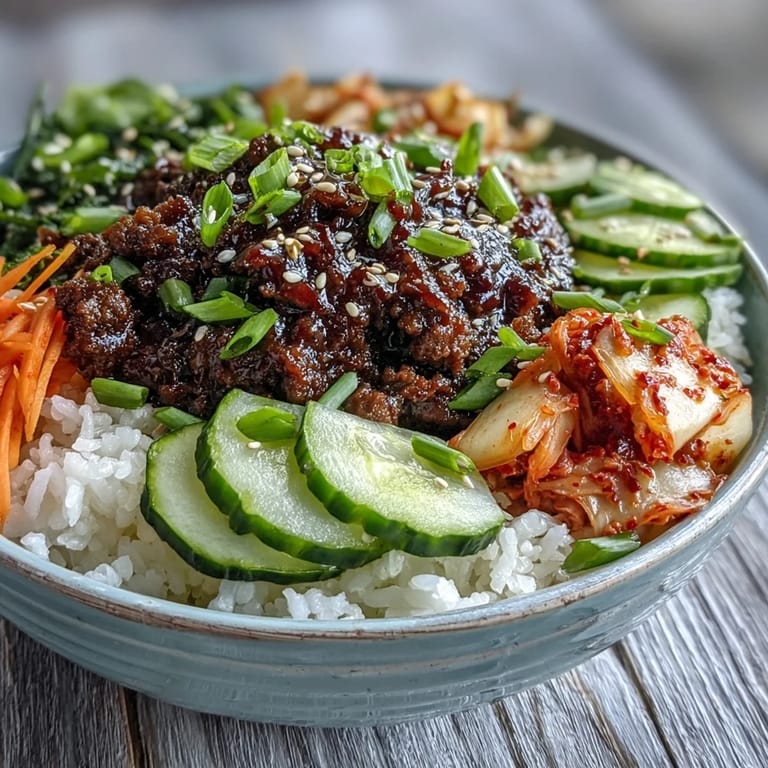
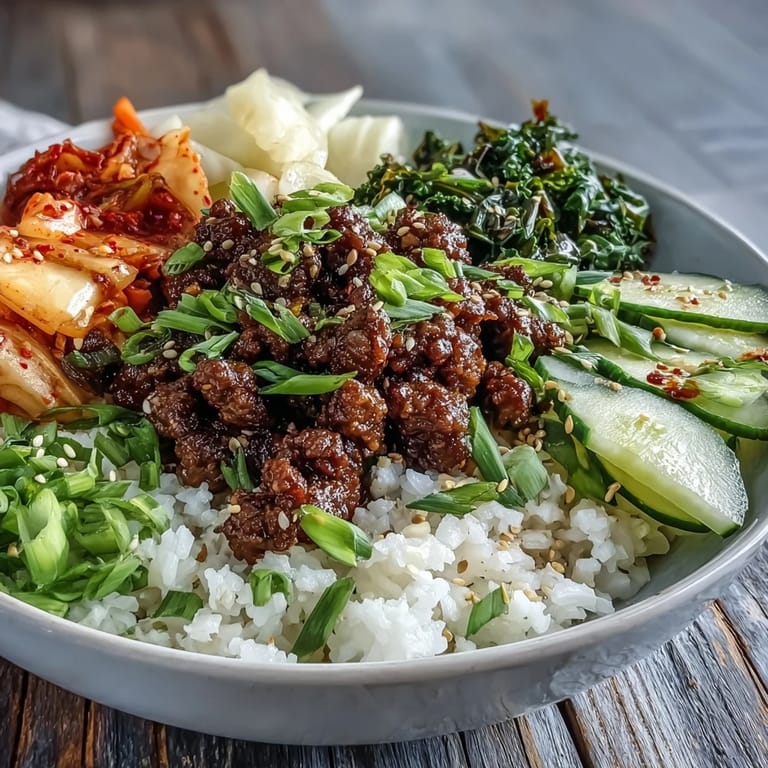
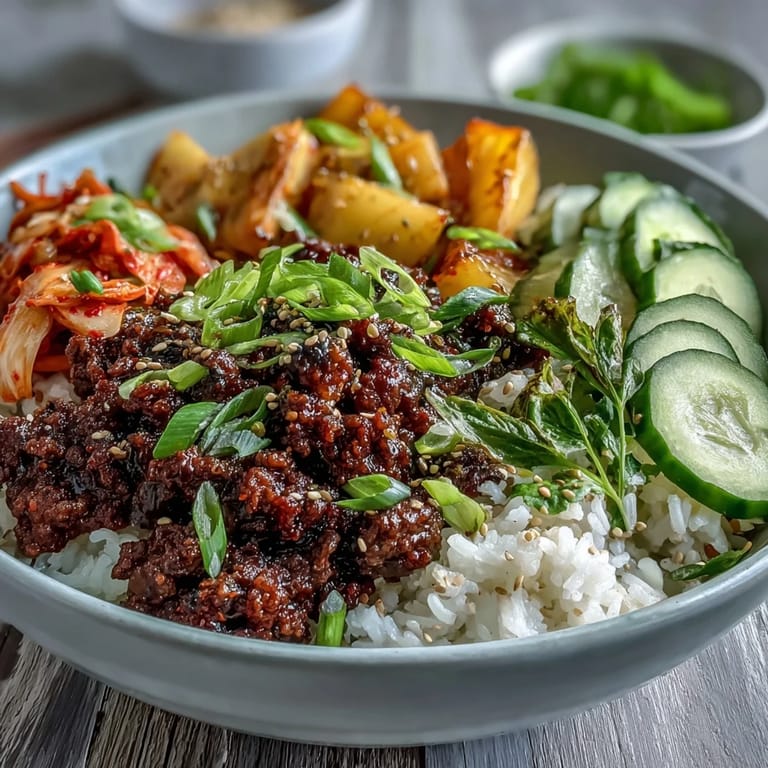
- Divide warm rice among four bowls, creating a small well in the center, then top generously with the beef and sauce. Arrange your pickled vegetables, fresh cucumber, radish, and kimchi around the beef like you're creating edible art, then scatter remaining green onions and sesame seeds on top.
 Save
Save There's something almost meditative about watching someone taste this bowl for the first time—that moment when the spice catches up with them, their eyes widen, and then they realize it's not just heat but actual flavor depth beneath. That's when I know I've made something worth making.
Building Your Perfect Bowl
The beauty of this dish is that it's as much about texture and temperature contrast as it is about flavor. Every element plays a role—the warm beef against cool cucumber, the tender pickled vegetables next to crunchy sesame seeds, the tangy kimchi cutting through the savory richness. I learned this by accident when I made a bowl for myself and realized halfway through that I was actually enjoying the process of each bite, not just rushing through it. The rice underneath absorbs all the sauce that drips down, creating these pockets of concentrated flavor at the bottom of the bowl that are almost better than the top.
Why This Works as a Weeknight Dinner
Most nights I don't have the mental energy for complicated cooking, which is exactly why this bowl has become my secret weapon. Every component can be prepped during those 20 minutes while the beef cooks, and the whole dish comes together in the time it takes to steam rice. There's no special technique to master, no temperamental ingredients that demand your full attention, just honest cooking that rewards you for showing up.
Making It Your Own
Once you understand the backbone of this bowl—seasoned ground meat, tangy pickled vegetables, fresh elements, and rice—you can play with it endlessly. I've made versions with chicken when beef wasn't in the budget, added roasted mushrooms for earthiness, or swapped in different vegetables depending on what looked good at the market. The gochujang sauce is forgiving enough that you can adjust the heat level, sweetness, or spice without breaking anything. Some practical reminders worth keeping in mind for your own kitchen experiments.
- If you want more heat, drizzle extra gochujang directly on your bowl or stir in a spoonful of sriracha into the cooked beef.
- Ground turkey or chicken works beautifully and cooks just as quickly, making this even lighter if that's what you're after.
- Any leftover beef and sauce keeps for three days in the fridge, so don't hesitate to make extra and rebuild the bowl the next day with fresh toppings.
 Save
Save This bowl has become more than just dinner in my house—it's become a way to say yes to flavor and texture without apologizing for the time it takes. Make it, taste it, and I think you'll understand why.
Recipe FAQs
- → What does gochujang taste like?
Gochujang delivers a complex flavor profile combining savory umami, moderate heat, and subtle sweetness. It's fermented, which adds depth similar to miso but with a distinctive Korean chili kick that's more rich than simply spicy.
- → Can I make this bowl less spicy?
Absolutely. Reduce the gochujang to 1-2 tablespoons for milder heat, or add a teaspoon of honey or extra brown sugar to balance the spice. Coconut milk stirred into the beef mixture also tempers the heat while adding creaminess.
- → How long do quick pickled vegetables last?
These quick pickled carrots and daikon stay fresh in the refrigerator for up to 2 weeks when stored in an airtight container. The flavors actually improve after a day or two as the vegetables have more time to absorb the vinegar mixture.
- → What rice works best for this bowl?
Short-grain white rice is traditional and provides a slightly sticky texture that helps the sauce cling to each grain. Brown rice adds nuttiness and extra fiber, while jasmine rice offers a fragrant aroma that complements the gochujang beautifully.
- → Can I use a different protein?
Ground turkey or chicken works well for a lighter version, though you may want to add an extra teaspoon of sesame oil to maintain richness. Crumbled tofu absorbs the gochujang sauce beautifully for a vegetarian option, while sliced ribeye or bulgogi-style beef creates a more traditional Korean barbecue experience.
- → Is kimchi necessary for this bowl?
While not strictly necessary, kimchi provides essential authentic flavor and probiotic benefits. If unavailable, substitute with quick-pickled cabbage or simply increase the amount of quick-pickled vegetables. The fermented tang of kimchi really ties the entire bowl together.