 Save
Save The first time I made pavlova, I'd just watched someone pull one from the oven with the most satisfying crack of the meringue shell, and I was absolutely convinced I'd somehow magically master it on my first try. Spoiler alert: I didn't. But that failure taught me more than any success could have, and now this ethereal dessert feels like second nature. There's something about that moment when you fold the last bit of cornstarch into glossy peaks and realize you're holding clouds in a bowl. It's become my go-to when I want to impress people without spending all day in the kitchen.
I'll never forget serving this to my neighbor Sarah on a summer afternoon when she came by with wine and we ended up chatting until sunset. She took one bite and got this quiet, almost stunned look on her face, and then said it tasted like eating something from a dream. That's when I realized pavlova isn't just dessert—it's a moment you create for people, light and air and berries that somehow make an ordinary day feel special.
Ingredients
- Egg whites (4 large, room temperature): This is non-negotiable—cold eggs won't whip to the volume you need, and even a speck of yolk will sabotage your peaks, so separate them carefully over a clean bowl.
- Superfine sugar (1 cup, 200 g): The fine granules dissolve faster than regular sugar, creating that silky, glossy meringue texture rather than a gritty one.
- Cornstarch (1 tsp): This is the secret ingredient nobody talks about but everyone should know—it stabilizes the meringue and gives you that perfect chewy center while the outside stays crisp.
- White vinegar (1 tsp): Acidic ingredients help meringue hold its structure, preventing weeping and keeping everything stable as it cools in the oven.
- Vanilla extract (1 tsp for meringue, 1 tsp for cream): A little vanilla bridges the flavors throughout, adding warmth without overpowering the delicate strawberries.
- Heavy cream (1 cup, 240 ml, chilled): Cold cream whips faster and holds peaks better, so keep it in the fridge right up until you use it.
- Powdered sugar (2 tbsp): Use powdered rather than granulated here because it dissolves instantly into the cream without leaving grittiness behind.
- Fresh strawberries (2 cups, 300 g, hulled and sliced): Peak-season strawberries make all the difference—ripe, fragrant ones that stain your fingers red are what you're after.
Tired of Takeout? 🥡
Get 10 meals you can make faster than delivery arrives. Seriously.
One email. No spam. Unsubscribe anytime.
Instructions
- Set your oven and prep the stage:
- Preheat to 275°F (135°C) and line a baking sheet with parchment paper, drawing a light 9-inch circle as your guide—this keeps you from spreading too wide or making it too thin.
- Whip the egg whites:
- In a completely dry, grease-free bowl, beat egg whites on medium speed until soft peaks form (they'll curl back on themselves when you lift the beaters). This takes about 3-4 minutes and you'll notice the foam getting denser and whiter.
- Add sugar gradually:
- Sprinkle in superfine sugar one tablespoon at a time, beating on high speed between each addition—rushing this step is the enemy of meringue. Keep going until you have stiff, glossy peaks that stand straight up and look almost three-dimensional, about 7-10 minutes total.
- Fold in the secret weapons:
- Using a rubber spatula, gently fold in the cornstarch, vinegar, and vanilla with as few strokes as possible, turning the bowl as you go. You want to preserve those air bubbles you've just spent ten minutes creating.
- Shape your meringue nest:
- Spoon the mixture onto the parchment circle, using the spatula to create a disc with slightly raised edges, creating a shallow well in the center that will cradle the cream and berries. It doesn't need to be perfect—rustic is actually more elegant here.
- The slow bake:
- Bake for 1 hour 15 minutes—the meringue will turn pale cream-colored and feel dry on top when done. Turn off the oven, crack the door open about 2 inches, and let it cool completely inside for at least 30 minutes so there's no temperature shock that causes cracking.
- Whip the cream while waiting:
- In a chilled bowl, whip heavy cream with powdered sugar and vanilla until soft peaks form—you want it billowy and still a bit loose, not stiff and buttery. Stop as soon as peaks just hold their shape.
- Macerate the strawberries:
- Toss sliced strawberries with a tablespoon of granulated sugar in a separate bowl and let them sit for 10 minutes—the sugar draws out their juices and creates a light syrup that's absolutely essential to the flavor.
- Assemble with care:
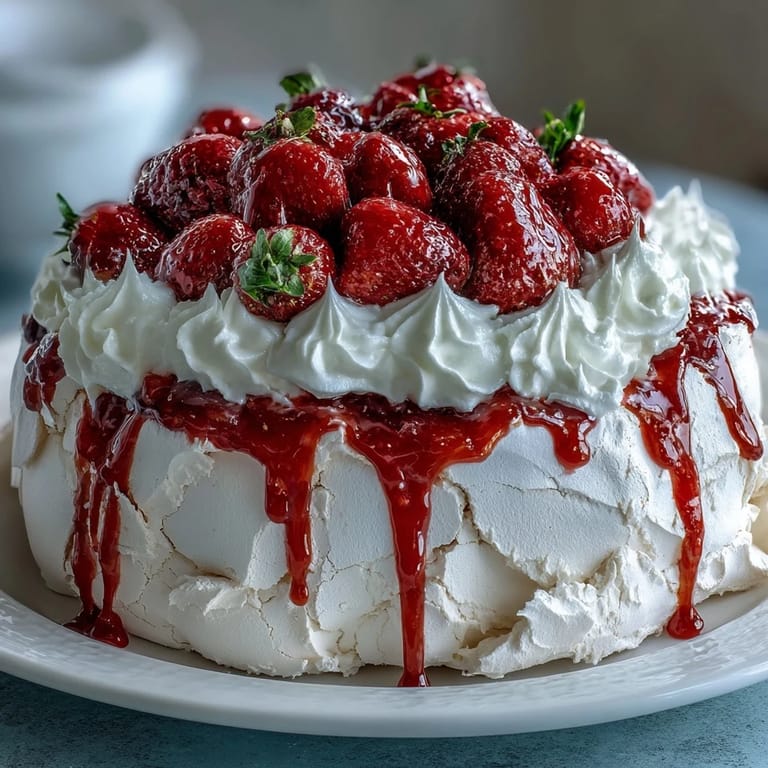
- Once the meringue is cool, carefully transfer it to your serving plate (it's delicate but sturdier than it looks once completely cooled). Spread whipped cream evenly over the center, leaving the edges slightly visible.
- The final flourish:
- Top with the strawberries and their juices, garnish with fresh mint if you have it, and serve immediately so the meringue stays crisp rather than softening from the moisture.
 Save
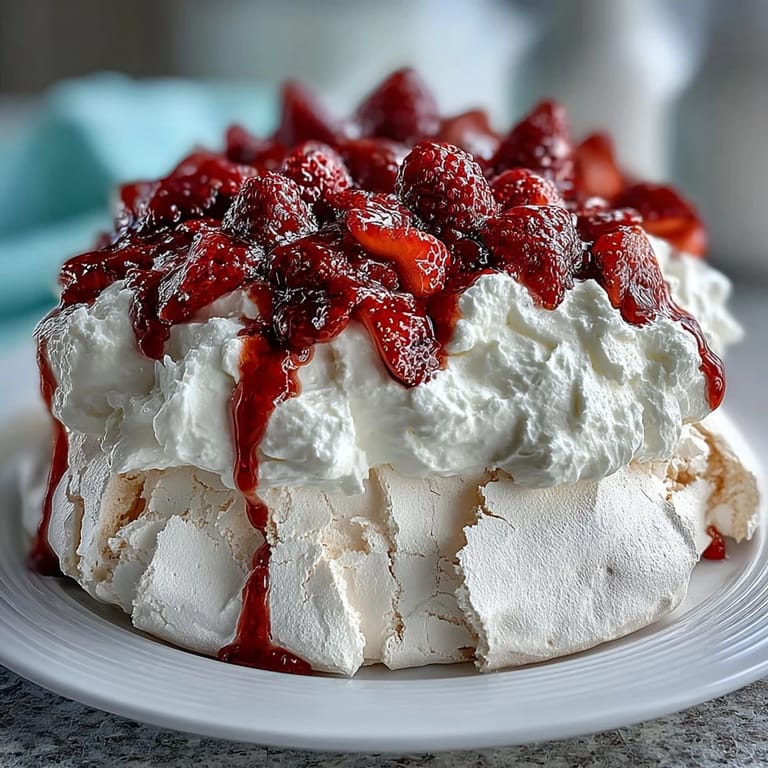
Save My mom called me mid-afternoon once while I was making this for a dinner party, nervous about whether I'd gotten the baking time right. By the time she arrived three hours later, I was pulling this golden, slightly crackled disc from my oven, and she just smiled and said, "You figured out the one thing I could never get right." That's when I understood that food is sometimes how we say the things that matter most.
The Meringue Mystery
Meringue used to feel like pure alchemy to me—something that could go from glossy and promising to grainy and broken in seconds if you blinked wrong. The turning point came when I learned that temperature and cleanliness aren't just suggestions, they're absolutes. Room-temperature egg whites whip to about twice the volume of cold ones, and even the tiniest smudge of oil can collapse the whole structure. Once I stopped treating these things as nice-to-haves and started treating them as non-negotiables, pavlova stopped feeling temperamental and started feeling achievable.
Timing and Temperature
The low, slow baking at 275°F is what creates that signature pavlova texture—crispy outside, chewy inside—rather than baking at high heat which would brown the meringue or create a dry, hard center. That final step of cooling in the oven with the door ajar is equally important because it lets the meringue dry gradually rather than shock it with a temperature change that causes cracks. I learned this by doing it wrong first: the time I forgot to crack the door open, my pavlova looked like a topographical map.
Strawberries and Cream
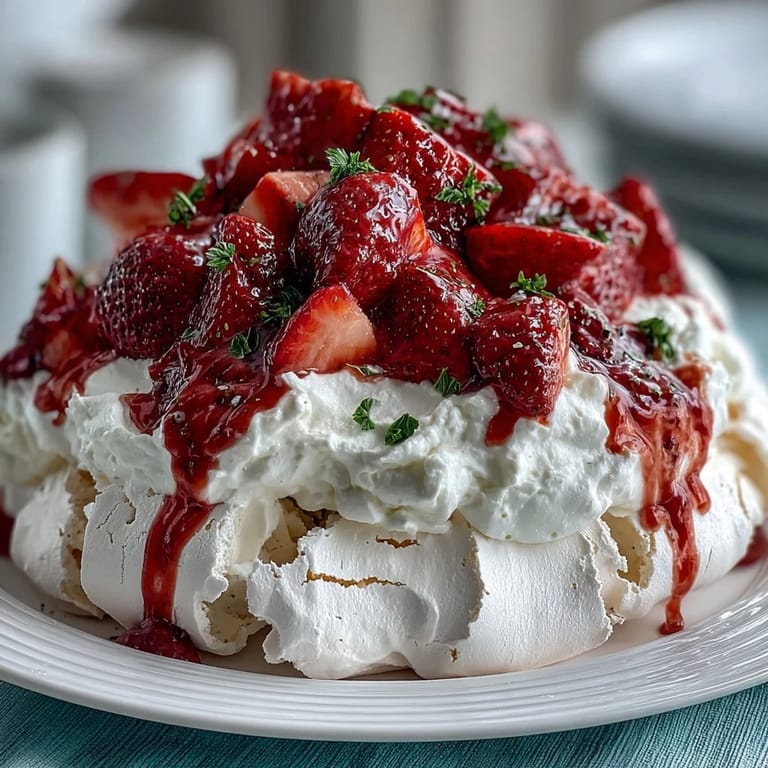
The magic trick with fresh strawberries is letting them macerate—those juices become a light syrup that pools around the berries and prevents the whole thing from tasting too sweet or one-dimensional. The interplay between the tart strawberry juice, the sweet meringue, and the neutral whipped cream is what makes this dessert feel balanced rather than cloying. Some people skip this step thinking it's extra, but it's actually where the sophistication lives.
- Slice strawberries about the same thickness so they look intentional and release juice evenly as they sit.
- Fresh mint is optional but transforms the dessert from nice to memorable with just a few leaves for garnish.
- Serve immediately after assembly or the meringue will start absorbing moisture and lose its snap.
 Save
Save This pavlova has become the dessert I make when I want to give people something that tastes like celebration but doesn't require fussing over all day. There's something about delivering plates of crispy-chewy clouds and berries that always makes people pause and really taste what's in front of them.
Recipe FAQs
- → How do you achieve a crisp yet chewy pavlova base?
Beat egg whites to stiff peaks, fold in sugar and other ingredients gently, then bake at low heat slowly before cooling inside the oven to set texture.
- → What is the best way to whip cream for topping?
Chill the bowl and whisk, then whip heavy cream with powdered sugar and vanilla extract until soft peaks form for a light, airy texture.
- → Can other fruits be used instead of strawberries?
Yes, a mix of berries or seasonal fruits can be used to complement the pavlova’s sweetness and add colorful freshness.
- → How should the strawberries be prepared for topping?
Hull and slice fresh strawberries, then optionally macerate them with granulated sugar to release juices and enhance flavor.
- → How can leftovers be stored without losing texture?
Store the pavlova refrigerated but expect the meringue to soften over time; best enjoyed fresh for optimal crispness.