 Save
Save I remember a Tuesday last January when the heater died and the draft in the kitchen was unbearable. Instead of calling the repairman immediately I reached for the ginger root on the counter to warm up from the inside. The sharp scent of sliced ginger hitting the simmering broth instantly cut through my cold mood. This soup started as a survival tactic but quickly became my favorite winter ritual. It is light enough for a quick lunch yet comforting enough for a long evening.
My neighbor dropped by while I was whisking the miso and she actually thought I was brewing a special tea. We ended up sitting on stools by the stove sharing bowls and talking about how different mushrooms change the broth color. There is something about the steam from a miso pot that makes people want to linger and talk. I realized then that a simple broth can be the center of a very cozy afternoon.
Ingredients
- Vegetable broth: Use a low sodium version so you can control the saltiness of the miso later.
- Fresh ginger: Slicing it thinly allows the spicy oils to seep into the water without overpowering the vegetables.
- Garlic cloves: These add a savory depth that balances the bright notes of the ginger.
- Miso paste: This fermented gold adds the creamy texture and umami that makes the soup satisfying.
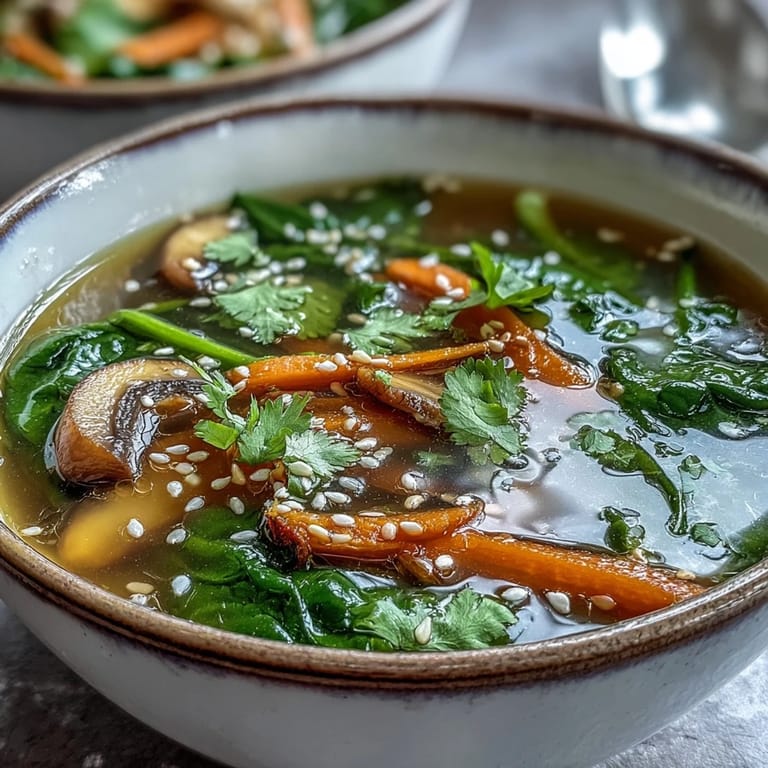
- Shiitake mushrooms: Their earthy flavor makes the light broth feel much more substantial and meaty.
- Carrots: Adding these julienned gives a beautiful orange pop and a touch of natural sweetness.
- Greens: Whether you pick spinach or bok choy they provide a fresh crunch and vibrant color.
- Green onions: These offer a mild bite that finishes the dish with a professional touch.
Tired of Takeout? 🥡
Get 10 meals you can make faster than delivery arrives. Seriously.
One email. No spam. Unsubscribe anytime.
Instructions
- Infuse the broth:
- Set your saucepan over medium heat and let the ginger and garlic release their aromatic magic into the liquid.
- Simmer the vegetables:
- Toss in the mushrooms and carrots letting them soften just enough to be tender but still lively.
- The miso secret:
- Ladle some hot broth into a separate bowl to dissolve the miso paste so you avoid any salty clumps in your soup.
- Final assembly:
- Lower the heat before stirring the miso back in to protect those healthy probiotics from high heat.
- Wilt the greens:
- Fold in the spinach and onions for just a moment until they turn a bright emerald green.
- Season and serve:
- Give it a quick taste and pour into deep bowls topped with crunchy sesame seeds and spicy oil.
 Save
Save One evening I was so hungry I added leftover udon noodles and a handful of tofu cubes to this exact base. It transformed the light snack into a hearty meal that kept me full until breakfast. I sat on the floor with my bowl watching the snow fall outside and felt completely at peace. It is the kind of recipe that adapts to whatever your body needs at that moment.
Choosing Your Miso
Choosing between white yellow or red miso can completely change your experience with this soup. White miso is mild and slightly sweet making it perfect for a gentle breakfast or a light snack. Red miso has been fermented longer and offers a much bolder punch for those cold nights when you want something savory. I usually keep a tub of yellow miso in the fridge because it sits right in the middle and goes with everything.
Seasonal Vegetable Swaps
Do not feel limited by what is on my list because the broth is a canvas for whatever is in your crisper drawer. I once added thinly sliced radishes and it gave the soup an unexpected peppery kick that I loved. Snow peas or even frozen corn can add texture and sweetness if you are out of carrots. The key is to slice everything thinly so it cooks through in just a few minutes of simmering.
Serving Suggestions
While this soup is a star on its own I often serve it alongside a simple bowl of steamed rice or some crusty bread. If you want to make it a full feast try pairing it with some pan fried dumplings or a crisp cucumber salad. It also travels surprisingly well in a thermos if you want a warm lunch at your desk.
- Add a squeeze of lime at the end for a bright citrus lift.
- Swap the spinach for kale if you want a leaf that stays firm longer.
- Try adding a drop of toasted sesame oil for a richer aroma.
 Save
Save This soup is my favorite way to find a moment of calm during the busy winter months. I hope it brings a bit of warmth to your kitchen today.
Recipe FAQs
- → What makes this soup restorative?
The combination of fresh ginger provides warming properties, while miso paste delivers beneficial probiotics that support digestive health and immune function during winter months.
- → Can I add protein to this soup?
Yes, cubed silken tofu works beautifully for extra protein while maintaining the light texture. You can also add edamame or cooked chickpeas for plant-based protein options.
- → Why shouldn't I boil the miso?
Boiling miso paste destroys the beneficial probiotics and enzymes that make it nutritionally valuable. Always stir it in at the end over low heat to preserve its health benefits.
- → What vegetables work best?
Shiitake mushrooms add umami depth, carrots provide natural sweetness, and bok choy or spinach wilts perfectly into the hot broth. You can also use kale, napa cabbage, or sliced snow peas.
- → How long will leftovers keep?
Store cooled soup in an airtight container for up to 3 days. The miso flavor will continue to develop, though the vegetables will soften over time. Reheat gently without boiling.
- → Can I make this gluten-free?
Yes, use certified gluten-free vegetable broth and tamari instead of soy sauce for seasoning. Double-check that your miso paste is made without barley or wheat additives.