 Save
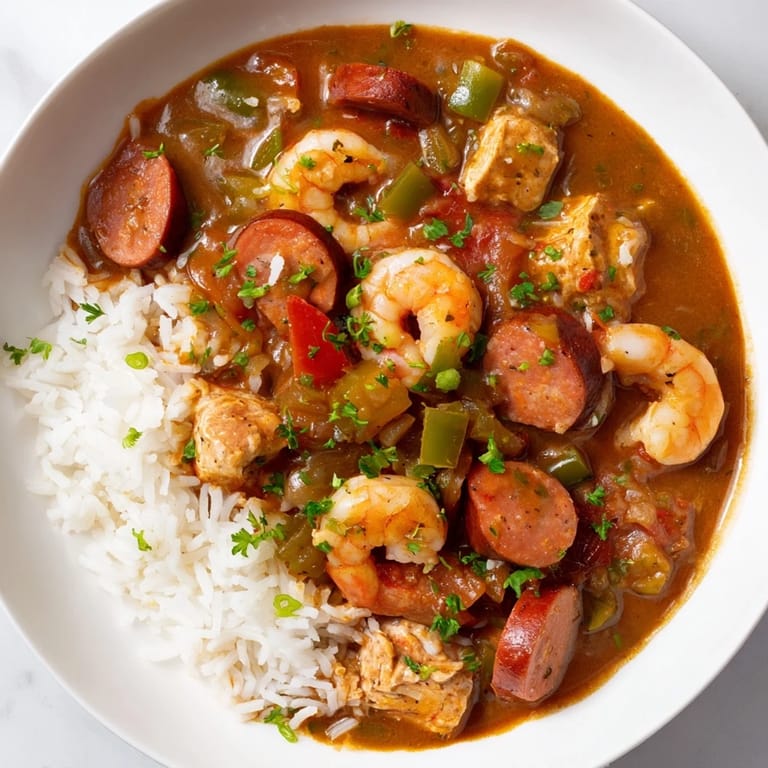
Save My first real gumbo came together on a gray January afternoon when my neighbor dropped off a bag of andouille sausage from his brother's butcher shop in New Orleans. I'd been wanting to make something that tasted like the South—not from a recipe book, but from that warm, layered memory of a kitchen filled with steam and voices. That first pot taught me that gumbo isn't rushed; it's a conversation between fire and patience, where the roux darkens like a secret being slowly revealed.
I made this for a dinner party once, and someone asked if I'd been cooking it all day—it only took two hours, but it tasted like love had been simmering the whole time. That's the magic of gumbo: it feels complicated and deeply personal, like you're sharing a piece of someone else's family table.
Ingredients
- Andouille sausage, 300 g (10 oz), sliced: This isn't just any sausage—it's smoky, spiced, and brings the soul of Louisiana right into your pot; don't skip it or substitute without intention.
- Boneless, skinless chicken thighs, 400 g (14 oz), cut into chunks: Thighs stay tender and flavorful in the long simmer, unlike breast meat which can turn stringy and sad.
- Medium shrimp, 300 g (10 oz), peeled and deveined (optional): Add these only at the end; they cook in minutes and deserve respect in that final stretch.
- Large onion, 1, finely chopped: This is your foundation—the sweetness balances the heat and spice beautifully.
- Green bell pepper, 1, diced: Part of the holy trinity that builds depth in every spoonful.
- Celery stalks, 2, diced: Often overlooked, but it adds an earthiness that rounds out the whole thing.
- Garlic cloves, 4, minced: Fresh and pungent—don't use the jarred stuff for this one.
- Tomatoes, 2 medium, diced (or 1 can diced tomatoes, drained): Fresh tomatoes bring brightness; canned works when they're not in season, but drain them well so your gumbo doesn't get watery.
- Scallions, 2, sliced (for garnish): These are your final touch—fresh, bright, a little textural contrast.
- Fresh parsley, 2 tbsp, chopped (for garnish): Don't skip it; it lifts everything.
- Vegetable oil, 80 ml (⅓ cup): You need enough to make a paste with the flour without burning; this is the right ratio I've tested a dozen times.
- All-purpose flour, 80 g (⅔ cup): This is the thickening agent that makes gumbo gumbo; precision matters here.
- Chicken or seafood stock, 1.2 liters (5 cups): Use good stock—homemade is best, but a quality store-bought version won't let you down.
- Bay leaves, 2: These perfume the whole thing; fish them out before serving.
- Dried thyme, 1 tsp: Herbaceous and grounding.
- Smoked paprika, 1–1½ tsp: The smoke is essential; it layers with the sausage in ways that taste deeply Southern.
- Cayenne pepper, ½ tsp (adjust to taste): This is where you control the heat; start here and add more if your crew can handle it.
- Salt, 1 tsp, or to taste: Taste as you go; you might need a touch more by the end.
- Freshly ground black pepper, ½ tsp: Fresh ground makes all the difference—none of that flat, dusty stuff.
- Worcestershire sauce, 2 tsp: A secret weapon that adds umami and makes people ask what that incredible depth is.
- Hot sauce, 1 tsp (optional): Some gumbos don't need it; some demand it. You're in control.
- Cooked long-grain white rice, 360 g (2 cups): Fluffy, separate grains that cradle the stew without getting mushy.
- Filé powder (optional): Ground sassafras—traditional, earthy, adds thickening power and a subtle woodsy note when stirred in at the very end.
Tired of Takeout? 🥡
Get 10 meals you can make faster than delivery arrives. Seriously.
One email. No spam. Unsubscribe anytime.
Instructions
- Prep like your life depends on it:
- Get everything chopped, measured, and within arm's reach before you touch that stove. The roux is unforgiving—it needs your full attention, and you won't have time to hunt for garlic once it's going.
- Build your roux with patience:
- Heat the oil in your heavy-bottomed pot over medium heat, then whisk in the flour slowly, stirring constantly. This is 15–20 minutes of continuous work—don't walk away—watching it transform from blonde to caramel to deep chocolate brown. You want it dark enough to taste like toasted nuts but not so dark it's burnt (which tastes bitter and ruins everything).
- Wake up the holy trinity:
- Add the onion, bell pepper, and celery to your dark roux and stir frequently for about 5 minutes until they soften and release their aromas. This is where the kitchen starts to smell like it knows what it's doing.
- Whisper in the garlic:
- Stir in the minced garlic and cook for just 1 minute—any longer and it turns acrid. You're looking for fragrant, not burnt.
- Brown the proteins:
- Add the sausage slices and chicken chunks, stirring and cooking for about 5 minutes until the edges are browned and the sausage has started to release its fat and spice. Don't overcrowd or rush this step.
- Layer in the seasons:
- Add the tomatoes, bay leaves, thyme, paprika, cayenne, salt, and black pepper, stirring to coat everything in that seasoned, savory base. The smoked paprika and cayenne are where the warmth and depth come from—don't be shy.
- Add the stock gently:
- Pour in your stock gradually while stirring to make sure everything stays smooth and nothing sticks to the bottom. Bring it to a boil, then reduce the heat to low and let it simmer uncovered for 45 minutes, giving it a stir every now and then.
- Finish with shrimp (if using):
- In the last 10 minutes of simmering, add the shrimp and cook just until they turn pink and opaque. Overcooked shrimp is rubbery; perfectly cooked shrimp is tender and sweet.
- Final adjustments:
- Stir in the Worcestershire sauce and hot sauce, then taste. Add more salt, cayenne, or whatever you feel is missing. This is your gumbo—make it sing.
- Thicken if you like:
- If you want extra body, stir in ½–1 tsp of filé powder at the very end (never let it boil after adding filé or it gets stringy and strange). If you skip it, your gumbo will still be delicious, just a touch brothier.
- Serve with reverence:
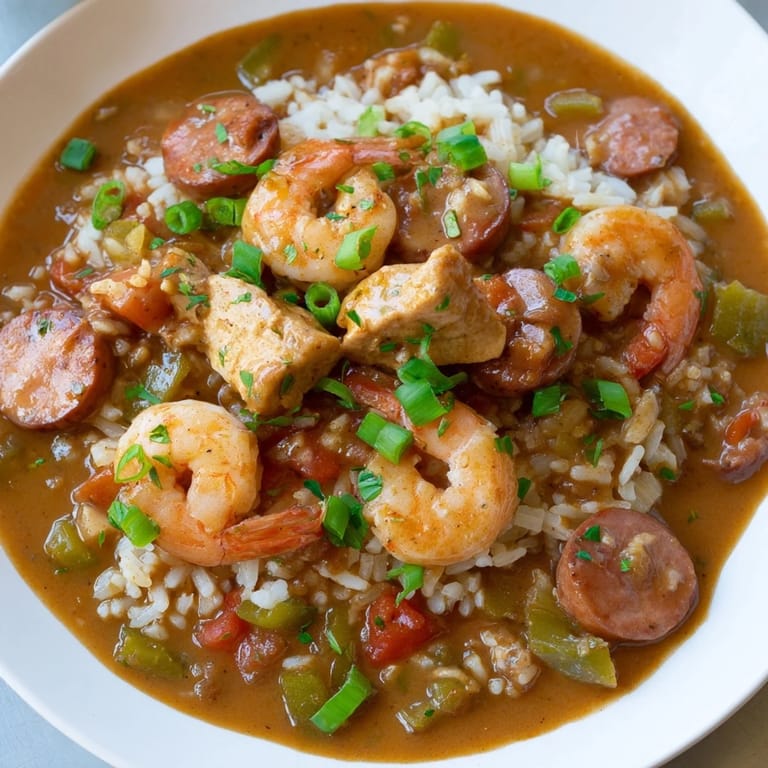
- Ladle the hot gumbo over fluffy white rice in bowls, then top with fresh scallions and parsley. Hand hot sauce around the table and let people adjust their own heat.
 Save
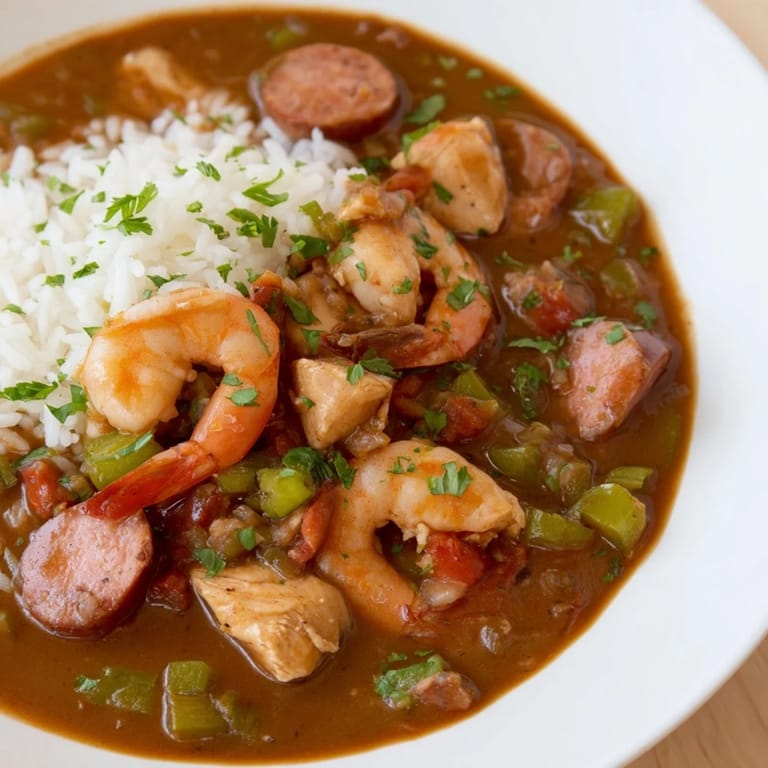
Save There's something about handing someone a bowl of gumbo that makes you feel like you've given them a story, a place, a memory that isn't even yours but suddenly feels shared. That's when I knew this recipe had become more than just dinner.
The Roux: Heart of the Matter
The roux is where gumbo gets its backbone, and it's worth understanding. When you heat oil and whisk in flour, you're creating a suspension that will thicken your broth and carry all those spices and savory notes. The color matters—it's a visual and taste signal. A blonde roux tastes floury and light; a chocolate roux tastes deep, rich, and almost nutty. For gumbo, you want dark, but not burnt. That line between perfect and ruined takes practice, and honestly, I've stood at that stove probably fifty times now and still pay attention every single time.
Playing with Proteins
This recipe holds both the classic land version (sausage and chicken) and the seafood variation beautifully. If you're going full seafood, skip the chicken and sausage entirely and lean into crab, oysters, or fish alongside the shrimp—each brings its own brininess and texture. The beauty is that the base stays the same, so you're really just swapping the star players while keeping the ensemble intact. I've made it both ways for different crowds, and everyone walks away satisfied.
Sides and Pairings
White rice is the traditional anchor, but if you want to get creative, you could serve this over corn bread, andouille-studded rice, or even with crispy fried okra on the side. As for drinks, a crisp lager cuts through the richness beautifully, or go with a chilled white wine if that's more your style. Set out hot sauce on the table—Louisiana, Crystal, Frank's, whatever you love—and let people dial in their own heat. This is a dish that brings people together, so make it easy and generous.
- Always have extra rice on hand; people tend to be generous with their portions when something tastes this good.
- Gumbo actually improves after a day or two in the fridge as flavors deepen and meld.
- Freeze it for later, but leave out the filé powder if you plan to; add that fresh when you reheat.
 Save
Save Gumbo is patient cooking for a world that often rushes, and somehow that matters. Every time I make it, I'm reminded that some of the best meals come from slowing down and trusting the process.
Recipe FAQs
- → What proteins can be used in this stew?
Traditional options include andouille sausage and chicken thighs, with shrimp added during the final simmer for a seafood variation.
- → How is the roux prepared for this dish?
The roux is made by slowly whisking flour into hot vegetable oil until it darkens to a deep chocolate brown, which adds depth and thickness to the stew.
- → Can I make this dish without seafood?
Yes, simply omit shrimp and seafood stock and focus on sausage and chicken for a flavorful alternative.
- → What vegetables form the base flavors?
The holy trinity of onion, green bell pepper, and celery is sautéed before adding other ingredients to build the stew’s aromatic foundation.
- → How is this dish typically served?
It’s served hot over cooked long-grain white rice and can be garnished with scallions and fresh parsley for added brightness.
- → What spices contribute to the flavor profile?
Bay leaves, dried thyme, smoked paprika, cayenne pepper, black pepper, and Worcestershire sauce combine to deliver the signature bold and smoky taste.