 Save
Save I discovered the magic of smoothie bowls on a lazy Sunday morning when my blender decided to jam halfway through making my usual drink. Rather than fight with it, I poured what little I'd managed to blend into a bowl, topped it with whatever looked appealing in the pantry, and grabbed a spoon instead of a straw. That happy accident taught me that sometimes the best breakfast innovations come from small kitchen failures—and now this vibrant green bowl is how I start half my mornings, especially when I need something that feels both indulgent and genuinely good for my body.
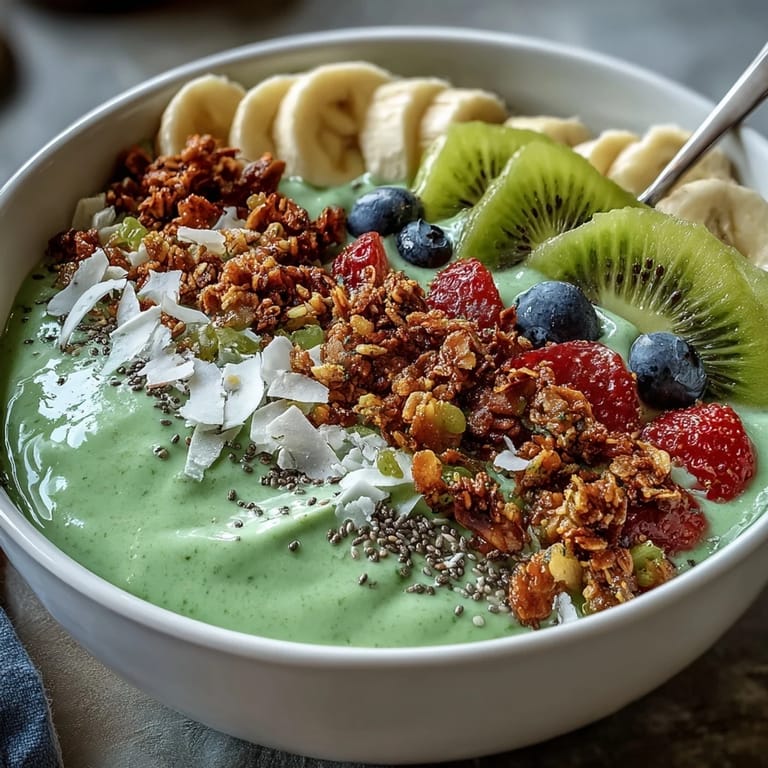
My neighbor stopped by one morning while I was making two bowls, and the way her face lit up when she saw that vibrant green base topped with colorful fruit made me realize how visual this meal really is. She asked for the recipe on the spot, and now she makes it for her kids on weekends because they actually get excited about eating spinach when it's hidden in something this beautiful. That moment reminded me that food isn't just about taste—it's about how it makes people feel when they sit down to eat it.
Ingredients
- Fresh spinach leaves: Two full cups might seem like a lot, but they collapse down dramatically when blended, leaving no grittiness behind—the key is really fresh, crisp leaves, not the sad wilted stuff at the bottom of your crisper drawer.
- Frozen banana: Slicing and freezing yours ahead of time costs nothing and gives you creamy texture without any ice cream or yogurt, plus it naturally sweetens the whole bowl.
- Frozen mango and pineapple chunks: These tropical fruits add brightness and tang that makes the spinach completely undetectable to anyone who thinks they don't like green smoothies.
- Unsweetened almond milk: Use whatever milk makes you happy, but unsweetened keeps the focus on the natural fruit sweetness and prevents the bowl from tasting like dessert soup.
- Chia seeds: A tablespoon might seem small but these tiny seeds thicken the blend and add protein and omega-3s that keep you fuller longer than you'd expect.
- Nut butter: This is optional but worth considering if you want the smoothie base to feel richer and more satisfying—just a tablespoon makes a real difference in mouthfeel.
- Honey or maple syrup: Taste as you go because frozen fruit often brings enough natural sweetness that you might skip this entirely.
- Granola: The textural contrast between creamy base and crunchy topping is what makes this a bowl and not just a smoothie, so don't skimp on this part.
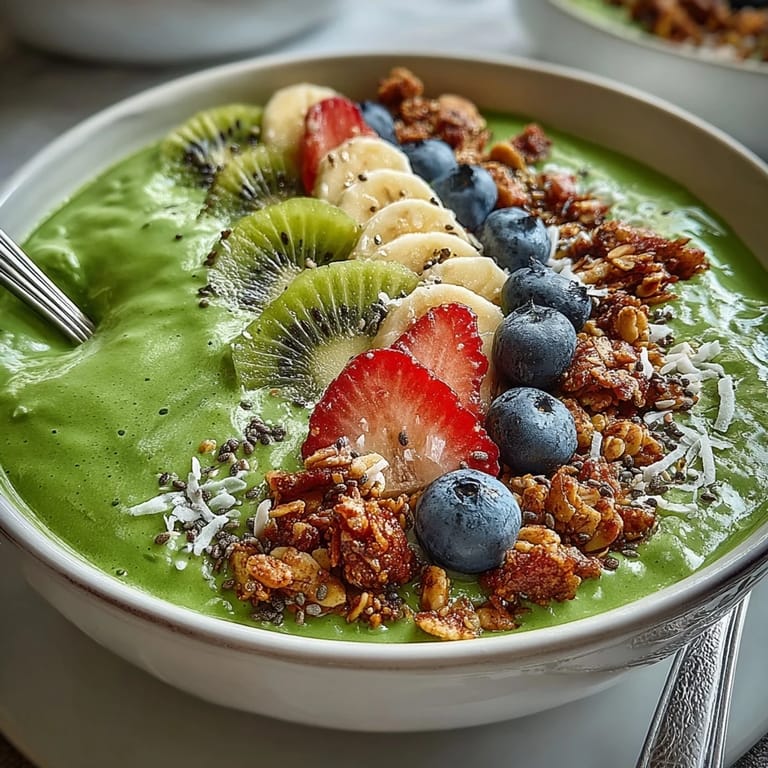
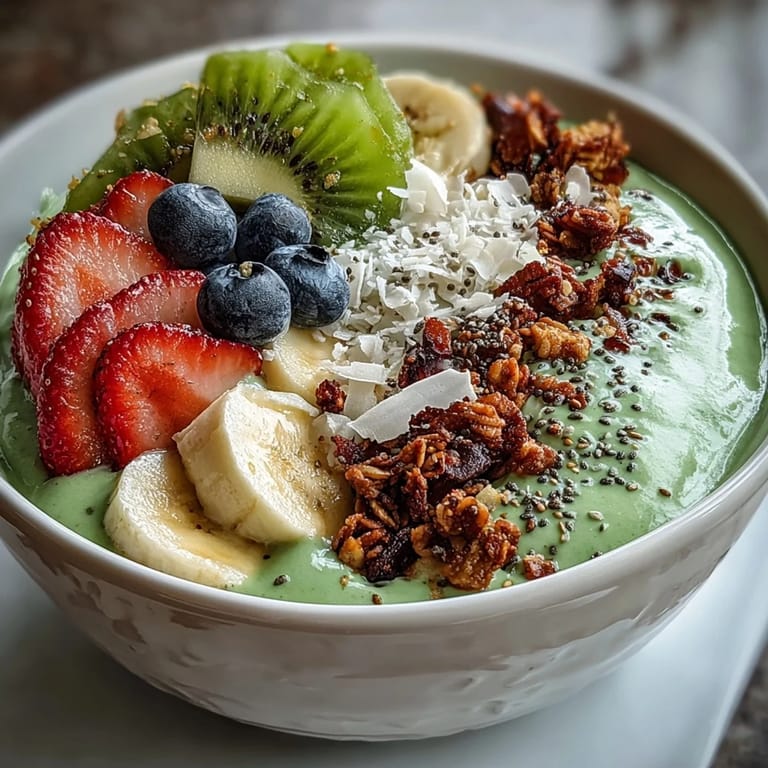
- Mixed fresh fruit for topping: Whatever looks good at your market works—kiwi adds tartness, berries add a pop of color, and banana slices add familiarity.
- Shredded coconut and extra seeds: These are totally optional but they add layers of flavor and texture that make each spoonful feel a little different.
Tired of Takeout? 🥡
Get 10 meals you can make faster than delivery arrives. Seriously.
One email. No spam. Unsubscribe anytime.
Instructions
- Gather and measure everything first:
- There's nothing worse than halfway through blending realizing you forgot something, so take thirty seconds to line up your spinach, frozen fruit, and liquids before you start. This also gives you a moment to assess whether your frozen fruit is still in individual pieces or if it's turned into one solid block that'll need a few extra pulses.
- Blend the base until it's perfectly smooth:
- Add spinach and frozen fruit to your blender first, then pour in almond milk and add chia seeds and nut butter if using. Blend on high for about a minute, watching through the side to make sure everything is actually incorporating—you want absolutely no green flecks or frozen chunks remaining, and if it looks too thick, add almond milk a splash at a time until it reaches that creamy but spoonable consistency.
- Taste and adjust sweetness:
- Pour a tiny bit into a spoon and taste before committing to the full blend—you might find the mango is sweet enough on its own, or you might need that teaspoon of honey. This is where you make it your own rather than following blindly.
- Divide between bowls right away:
- The smoothie base is best served immediately while it still has that cold, creamy texture, so don't let it sit around while you're deciding what toppings to use.
- Top with intention and texture:
- Pour the base evenly into two bowls, then arrange your granola, fresh fruit, coconut, and seeds in a pattern that makes you happy—this isn't about perfection, it's about creating little pockets of different textures and flavors that keep things interesting as you eat down through the bowl.
- Eat with a spoon and without hurrying:
- This is the whole point of making it a bowl instead of a smoothie—you get to slow down and experience each component, from the creamy base to the crunchy granola to the juicy fresh fruit.
 Save
Save There's something almost meditative about standing in front of an open bowl, spoon in hand, knowing you've created something that's going to make you feel genuinely good. I've found that on mornings when I'm feeling scattered or low-energy, making this bowl becomes an act of taking care of myself in a small but visible way.
Making This Your Own
The beauty of smoothie bowls is that they're infinitely flexible once you understand the base formula—you can swap frozen mango for frozen peaches, use berries instead of pineapple, or even experiment with frozen papaya if you're feeling adventurous. The only rule is that you need enough frozen fruit to make it thick enough to eat with a spoon, and enough liquid to make it actually blendable. I've made versions in winter with just frozen berries and banana, summer versions overflowing with fresh stone fruit, and spring versions when strawberries hit the farmer's market and I just wanted to celebrate them.
Customizing for Your Dietary Needs
If nuts are a concern in your kitchen, seed butters like sunflower or tahini work beautifully in place of almond butter and often taste even more interesting. For protein-heavy versions, a scoop of vanilla or plain protein powder disappears entirely into the base and bumps up the staying power without adding any weird aftertaste. Dairy-free, vegan, gluten-free—this bowl adapts to whatever your body or preferences need without feeling like you're making a compromise version of something.
Topping Ideas and Storage
The toppings are where you get to be creative and use up whatever fresh fruit is lingering in your fridge or what looks exceptional at the store that day. Granola is non-negotiable for textural contrast, but beyond that, consider nut butters drizzled on top, sliced kiwi for tartness, pomegranate seeds for little bursts of flavor, or even a drizzle of almond milk mixed with a tiny bit of maple syrup if you want the whole thing to feel extra luxe. The base is best consumed immediately, but if you need to make it ahead, blend it, refrigerate it in a covered container for up to twenty-four hours, and just give it a good stir before pouring into your bowl since separation is totally normal.
- Keep pre-portioned bags of frozen fruit in your freezer so a smoothie bowl breakfast is always just a blender away.
- Toast your own granola in batches and store it in an airtight container to have on hand for quick breakfasts all week long.
- Remember that ripe, about-to-go-bad bananas sliced and frozen become your secret weapon for creamy smoothies anytime you need them.
 Save
Save This bowl has become my answer to almost every breakfast question—when I'm hungry, when I'm in a hurry, when I want something that feels special but takes no real effort. Make one today and you'll understand why.
Recipe FAQs
- → Can I make this bowl ahead of time?
For best texture and freshness, blend and serve immediately. The smoothie base will separate if stored, and toppings like granola will lose their crunch. You can prep ingredients the night before—wash spinach, slice fresh fruit, and portion frozen fruit—for quick assembly in the morning.
- → What liquid alternatives work well?
Unsweetened almond milk creates a creamy, neutral base, but coconut milk adds richness while oat milk provides natural sweetness. For extra protein, try plain or vanilla Greek yogurt diluted with a splash of water. Adjust the amount to reach your preferred thickness—start with 1/2 cup and add more as needed.
- → How can I make it more filling?
Add a scoop of your favorite vanilla or unflavored protein powder to the blender for extra protein. A tablespoon of almond butter, peanut butter, or cashew butter adds healthy fats and creaminess. You can also blend in rolled oats or ground flaxseeds for fiber that keeps you satisfied longer throughout the morning.
- → What fruits work best in the base?
Frozen banana is essential for creating that thick, creamy texture similar to soft serve. For the green hue, spinach works perfectly without overpowering flavor. Tropical fruits like mango and pineapple pair beautifully with spinach, but berries, peaches, or even avocado for extra creaminess make delicious variations. Stick to frozen fruit for the best consistency.
- → Is this suitable for meal prep?
While best enjoyed fresh, you can freeze individual portions of the blended base in freezer-safe containers. Thaw overnight in the refrigerator, give it a quick stir or blend with a splash of liquid, then add toppings just before serving. Keep granola and fresh fruit separate to maintain their texture and prevent sogginess.
- → How do I make it completely nut-free?
Choose seed-based granola or make your own using oats, seeds, and dried fruit. Omit nut butter entirely or replace with sunflower seed butter or tahini for similar creaminess. Check that your almond milk alternative doesn't contain nuts—oat milk, rice milk, or coconut milk work wonderfully as substitutes.