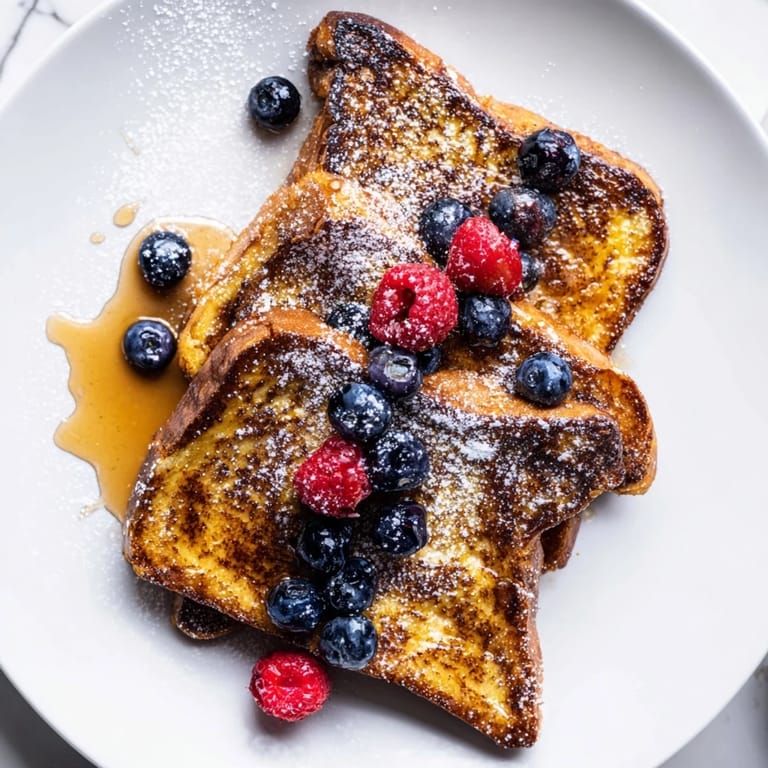
 Save
Save There's something about the smell of butter hitting a hot pan on a lazy Sunday morning that makes everything feel like it's moving slower, in the best way. I learned to make French toast the way my roommate did back in college—without measuring anything, just intuition and whatever bread was getting stale on the counter. She'd crack eggs into a bowl with the confidence of someone who'd done it a thousand times, and somehow her version was always better than mine until she finally let me watch. That first time I got it right, when the bread turned that perfect golden color and the custard inside was still creamy, I understood why this simple dish has survived centuries of breakfast tables.
I made this for my partner the morning after we moved into our first place together, and I remember being so nervous about getting it wrong that I stood there with the spatula in my hand like I was diffusing a bomb. The kitchen smelled incredible, and when they came down the stairs and saw the plate waiting, that nervous feeling just melted away. It became our quiet ritual after that—every Saturday, no conversation needed, just the sizzle of the pan and the ritual of it.
Ingredients
- 4 large eggs: The foundation of your custard—they need to be at room temperature if you have time, though nobody will judge you if you don't wait.
- 1 cup whole milk: This is what makes it custard instead of just eggy bread, so don't skip it or swap it for something thinner.
- 2 tbsp heavy cream: Optional, but it's the difference between good and the kind of French toast people ask you to make again.
- 1 tbsp granulated sugar: A light touch of sweetness that lets the bread flavor come through.
- 1 tsp pure vanilla extract: Use the real stuff if you can—the imitation has a bitter edge that sneaks up on you.
- 1/2 tsp ground cinnamon: Warm and nostalgic, though you can leave it out if you want to taste the pure custard.
- Pinch of salt: This tiny amount makes everything taste more like itself.
- 8 slices of day-old brioche, challah, or thick white bread: The secret nobody talks about—stale bread is actually what you want here because it soaks up the mixture without dissolving into mush.
- 2 tbsp unsalted butter: For cooking, and you'll probably use a bit more as you go, which is fine.
- Maple syrup, powdered sugar, fresh berries: Toppings that make it feel like a special occasion, even on a regular Tuesday.
Tired of Takeout? 🥡
Get 10 meals you can make faster than delivery arrives. Seriously.
One email. No spam. Unsubscribe anytime.
Instructions
- Whisk the custard together:
- In a bowl, combine the eggs, milk, heavy cream if you're using it, sugar, vanilla, cinnamon, and salt. Whisk until it's smooth and uniform—this takes less than a minute, and you want to make sure the sugar is dissolved. The mixture should smell sweet and creamy.
- Get your pan hot and buttery:
- Heat a non-stick skillet over medium heat and add a tablespoon of butter. Let it melt and get a little foamy—this is when you know it's ready, and the whole kitchen will smell like a breakfast dream.
- Dip each slice with intention:
- Take one bread slice and dip it into the custard, making sure both sides get a quick bath. The key word is quick—two to three seconds per side so the bread drinks up the mixture without becoming a soggy disaster.
- Cook until golden and set:
- Place the soaked bread onto the hot skillet and listen for that satisfying sizzle. Cook for about two to three minutes on the first side until the edges look golden and firm, then flip gently and cook the other side the same way.
- Keep the rhythm going:
- Transfer each finished slice to a plate and repeat with the remaining bread, adding more butter to the pan as it disappears. You'll know you need more when the sizzle changes pitch.
- Serve while the warmth is still in them:
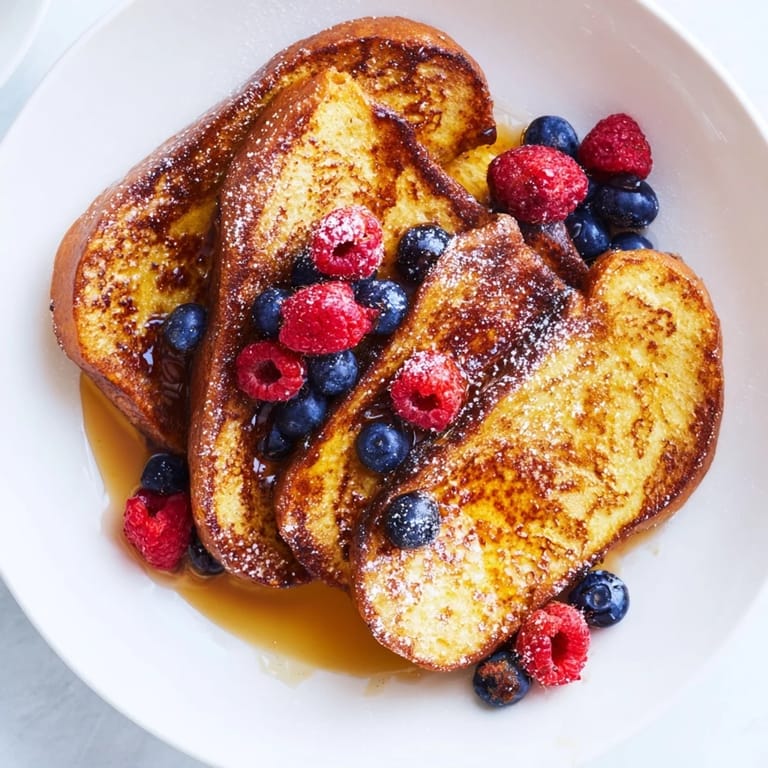
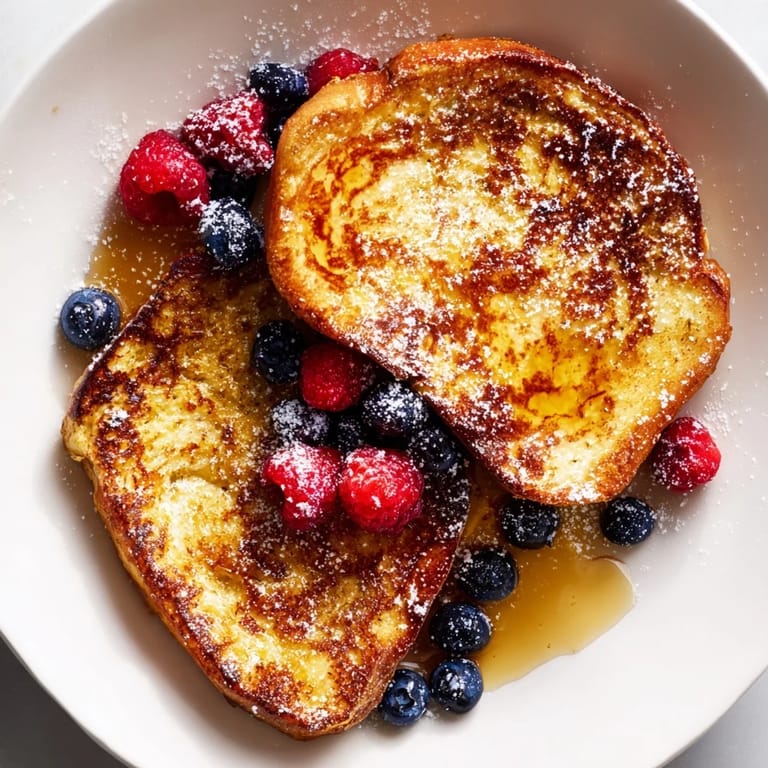
- Top with maple syrup, a whisper of powdered sugar, and fresh berries if you have them. Eat right away while the inside is still custardy.
 Save
Save The first time someone told me my French toast reminded them of being a kid at their grandmother's house, I realized this dish does something most food doesn't—it carries memory before it even hits the tongue. It's breakfast as comfort, breakfast as love, breakfast as the quiet permission to take your time on a morning when everything else can wait.
Why Day-Old Bread Changes Everything
There's a reason bakers and pastry chefs always talk about using older bread, and it's not because they're being precious about it. When bread sits for a day, the moisture inside starts to redistribute and the structure becomes slightly less dense—which sounds boring until you realize that this is exactly what makes French toast work. Fresh bread is too tight and doesn't let the custard penetrate; it either stays dry or becomes waterlogged and falls apart. The sweet spot is bread that's been sitting around since yesterday but hasn't turned rock-hard and inedible.
The Small Details That Matter
Butter temperature affects everything, which I learned the hard way after making a batch where the outside burned before the inside cooked through. The skillet should be hot enough that the butter foams immediately when it hits the pan, but not so hot that it browns and smokes—that medium heat is where the magic lives. Also, don't be afraid to take your time dipping the bread; a quick second or two on each side is all it takes, and you'll develop an instinct for it after the first couple of slices.
Make It Your Own
The beauty of French toast is that it's a canvas, not a prison. I've made it with orange zest stirred into the custard, with a splash of rum or bourbon that burns off but leaves its warmth behind, and once with a pinch of cardamom because I was feeling fancy and my friend had just brought some back from their trip. You can toast the bread slices first if you want them extra crispy on the outside, or use challah instead of brioche for a lighter, airier crumb. The core technique stays the same—eggs, milk, bread, heat, butter—but everything else is up to you.
- Try adding a tiny bit of nutmeg or a splash of orange juice to the custard mix for something unexpected.
- Cook at medium-low instead of medium if you like a softer exterior and more custardy interior.
- Make extra and refrigerate the leftovers, then crisp them up in a toaster the next morning if you somehow have leftovers.
 Save
Save French toast is one of those recipes that proves the simplest ideas, made with attention and care, are often the most satisfying. Make it this morning, and I promise you'll understand why people have been making it for hundreds of years.
Recipe FAQs
- → What type of bread works best for this dish?
Day-old brioche, challah, or thick white bread absorb the custard well without becoming soggy, offering the best texture.
- → Can I add extra flavor to the custard mix?
Yes, adding a pinch of cinnamon, vanilla extract, or even orange zest enhances the flavor depth beautifully.
- → How do I prevent the bread from getting soggy?
Dip the slices briefly in the custard so they absorb just enough liquid, then cook immediately on medium heat.
- → Is it possible to make a dairy-free version?
Yes, substitute plant-based milk and butter to create a dairy-free variation without sacrificing richness.
- → What toppings complement these custardy bread slices?
Maple syrup, powdered sugar, and fresh berries add sweetness and freshness, creating a balanced finish.